My gorgeous grandson, Leo, was surrounded by his adoring great-grandfather, grandfather and father. The love for him radiated from these three men. Watching them, I wondered how the experience of becoming a dad had shifted across the three generations.
Arthur (Great Pa, Pa, Dad) – Became a father in 1957 at the age of 25.
When Arthur and I chatted about him becoming a dad, my 92-year-old father-in-law had been married to his wife, Rhonda, for 70 years. He has three children, Greg, Steven and Jenell and has a clear recollection of when his oldest son, Greg, was born.
“Rhonda was in the kitchen when her waters broke, five weeks before the due date. In those days, in a country town, women went to the doctor when they went into labour, not the hospital. The doctor thought not much would happen as the baby wasn’t due but sent Rhonda to the small hospital for a check-up. Rhonda was admitted to the hospital, and I went home to bed. I got up at daybreak and went to work fixing milking machines.
I got back to town at about 10 am. People stopped me in the street and congratulated me on becoming a father to a son, but I hadn’t heard that the baby had been born. I rushed to the hospital. Rhonda was in the ward, and newborn baby Greg was in the nursery. As was common at the time, Rhonda hadn’t been allowed to see Greg since the birth. I went straight to the nursery to make sure he had 10 fingers and toes. He was perfect. I felt like I was the last one in town to know he’d been born.
Rhonda was out of hospital in a few days, but 5 lb premature baby, Greg, stayed in the hospital for about 3 weeks. Rhonda stayed with her mother, who lived close to the hospital, which made it easier for her to walk up and deliver expressed breast milk and see Greg.
I didn’t have time off work when any of our three children were born. Rhonda’s mother helped her. Each baby was taken weekly to the baby health clinics operated by the Country Women’s Association.
I did change nappies, and you flushed them in the toilet for the initial clean. You had to hold on tight to the corner, so you didn’t lose them and block the drains.”
The couple were 22 and 25 years old when they became parents. They lived in their own home, which Arthur was building around them. Rhonda described Arthur as “working from daylight to dark”.
Steven – (Poppy, Dad). Became a father in 1987 at the age of 28.
Next came my husband, Steven, Arthur’s second son. He described his experience of becoming a dad when our son Mark was born. My mouth was firmly shut and did not prompt him, because I was there too, but this was about his experience.
Steven with baby Mark. Day 1 of becoming a dad
“I first found out I was going to become a dad through a home pregnancy test.We did two of the tests just to be sure. This was something we had planned and were both very excited and a little surprised that it hadn’t taken us long to get pregnant.
We went to childbirth classes for a few weeks, and the most important thing I learnt was the importance of being there as a support to Anne, and that I wasn’t the one having the baby.
Anne went into labour in the evening. Through the early stages of labour, she was getting in and out of the shower; she seemed very capable and confident. I was timing the contractions throughout, as we didn’t want to go to the hospital too soon. On the flip side, we didn’t want to leave it too late either. I don’t remember being worried, but I was certainly a bit scared; I’d never done this before.
I drove us to Nowra hospital, where I had also been born. The labour bag was packed, and we were prepared. We were ushered straight to the blue birthing room. The nurses examined Anne and found she was only 5 cm dilated; this was a little disappointing as we had expected her to be further progressed. It seemed like there was still a long way to go.
I continued to help Anne in and out of the shower at the hospital, rubbing her back and holding her hand. The labour went on for hours, with Anne eventually having an epidural. I didn’t want to see her hurting, but I also knew she wanted the birth to be as natural as possible.
When the baby was crowning, the doctor asked if I wanted to look. Of course I did, but what I saw made me go weak in the knees, almost fainting. I quickly retreated and sat back down at Anne’s head.
We were thrilled to hear the Doctor say, “It’s a boy”; we had chosen not to know beforehand. Our healthy son Mark was wrapped in a blue blanket and handed to Anne. I cried happy tears of joy and relief.
There were no mobile phones in those days, so I drove over to tell Mum and Dad the exciting news, had a shower and went back to the hospital. Anne and Mark were home in a couple of days. I think I had a week off work.
Having a new baby was scary; I was particularly scared of jabbing him with a nappy pin, dropping him in the bath or knocking the umbilical cord wound. I did everything I could to help.
I remember we had a big yellow nappy bucket in the bathroom. As Dad said, you flushed the dirty cloth nappies in the toilet first, holding on tight not to lose them, then soaked them in the nappy bucket until you washed them.
Mark slept in a bassinet in our room. I was aware that the baby was not allowed to sleep in our bed, and I was scared of squashing him when Anne breastfed him in bed.
Mark met two great-grandmothers and his great-grandfather in the first week of his life.
It was an amazing, wonderful thing to witness this creation of life, so special.”
Steven was 28, and I was 31 when we became parents. We had recently moved to Nowra, where Rhonda and Arthur lived.
Mark (Dad) – Became a father in 2023 at the age of 35.
And the newest dad is Mark – Steven and my son, and Arthur’s grandson. I chatted to Mark about the birth of his son Leo, who is now 3 years old.
Mark with baby Leo. Day 1 of becoming a dad.
“We did IVF to have Leo, so it was a series of interventions and then tests. I was excited and nervous when I found out my wife, Kim, was pregnant. We’d already had a miscarriage.
We went to two birthing courses, one that the midwives ran and the other a hypnobirthing one.
The hypnobirthing course was more about the mother’s rights, how to ask questions and make decisions, rather than go with the whim of the doctors and midwives. I also learnt techniques about how to calm Kim and how to make us feel more connected as a couple.
The midwife course was more about medical interventions like epidurals and continuous fetal monitoring.
Kim went into labour when her waters broke in the morning. She had some contractions, and we went to the hospital in the evening. She got checked, but the contractions were not deemed that serious, and we were sent home.
The contractions went on for another two days, and we checked in at the hospital each day. On the third morning, we went to the hospital, and the decision was made to induce Kim. I’d forgotten the bags we’d packed, so I rushed home again, dropped the dog off with mum and dad and went back to the hospital. I felt silly and was worried the baby would be born before I got back.
We were lucky to be in a birthing room; we had music, diffusers, a mood board, fairy lights and a large exercise ball.
Kim’s contractions ramped up, becoming more intense and consistent. Kim used a TENS machine and gas for pain relief. She kept mobile until contractions became 1-2 minutes apart, then she spent more time on the bed.
I was standing with her, talking her through the contractions, holding her hand, encouraging her, reminding her that the pain was good and healthy.
When she was 8 cm dilated, we knew she didn’t have long to go. About half an hour later, she was ready to push. I was holding her hand and watching. For the first time, she said she couldn’t do it anymore, but you could already see his head. We knew it was going to be a boy.
Cat Stevens “Wild World” was playing when our son was born, and I cut the cord.
The doctor only came right at the end. The labour was managed by midwives.
Leo was born at 8.30 pm. It was a gobsmacking moment, loving. I cried. Kim was amazing.
I stayed until midnight, stopped at Mum and Dad’s to tell them our wonderful news. I was back at the hospital by 6 am. We left that day after all the tests and visits by physios and lactation consultants had been done.
I had six weeks off work when Leo was born, then took another three months off when Kim went back to work when Leo was one.
During those six weeks, I started learning how to be a dad. I changed nappies, bathed Leo and cooked meals. No nappy bucket for us, we used disposables. I made sure Kim was hydrated and fed.
Leo met his grandparents on the first day.”
Mark and Kim were both 35 when they became parents. Living in Brisbane, just 5 minutes’ drive from us. They are eagerly expecting their second son in March 2026.
And now a fourth generation
Three generations of men becoming dads, three very different worlds, and one shared moment: holding their newborn child for the first time.
Now there are four generations who share the middle name Osborne.
I can’t help but wonder what it will be like for Leo if he becomes a father one day.
Whatever the future looks like, I hope he feels what these three men felt — awe, love, and the quiet realisation that life has just changed forever. I hope he and his soon-to-be-born brother continue to feel the legacy of love that these men have bestowed on him.
Three gorgeous children, under the age of 8, in a Brisbane suburban backyard on a sunny Monday morning. They embark on a serious lizard-hunting expedition. My heart swells with joy…. and aches with sorrow as I watch them.
A Great Nephew
The oldest boy is my great-nephew. He is my sister’s grandson, visiting from New Zealand with his parents for a lovely long weekend of family connection and to join our annual Christmas Carols extravaganza. I visited my sister in New Zealand in January 2025. At 79 years old, she was living at home with her husband, and while she seemed somewhat withdrawn and a little confused, life was much like it had been for many years. I had an underlying sense of disquiet and gently encouraged her to talk about death and dying with her children. By May, everything had changed, and we found ourselves revisiting New Zealand. This time, my sister was living in an aged care facility and did not know who I was. She was frail and unable to walk. She will never watch her grandson curiously adventuring in her backyard or hear his yelps of delight.
A Great Niece
The girl is my great niece. She lives in Brisbane and is the youngest granddaughter of my husband’s brother, who died in 2024, too young at 66. We’ve had the delight of looking after her for six Mondays in the lead-up to Christmas. Although she lives close by, we have previously spent more time with her older sisters, so we relished getting to know this smart and inquisitive girl who loves exploring our garden. I wish her Poppy could see her now, eyes bright with wonder.
A Grandson
The youngest boy is my grandson, with us regularly on Mondays. He is the link between the two older children who come from different branches of his family. They are second cousins to him but strangers to each other until now. His excitement is pure, his joy contagious as his second cousins join him on a lizard hunt. In their laughter, I hear the next generation weaving new threads of connection.
Ordinary days, extraordinary moments
An ordinary day, but not an ordinary moment. It’s a moment heavy with meaning—a snapshot of family history, love and loss. A moment that rewards every effort to show up for these children, and honours the trust their parents place in us. A moment that whispers: This is what matters.
I am so grateful to be here on this day with these three children and hold this memory close.
What was your 2025 Moment?
This was mine—a simple backyard adventure that became a treasured memory. Life gives us these quiet, extraordinary moments if we pause long enough to notice them.
I’d love to hear your magic moment for 2025. What was the moment that made you stop, breathe, and think, This is what matters? Share your moments in the comments below. Let’s celebrate the beauty of everyday life together.
In Thailand and Cambodia people make offerings to spirits every day to create positive karma. We, as tourists, must have been included in their wishes for happiness and well-being as we’ve had a fortuitous trip.
We anticipated a spectacular but busy day at the Grand Palace as we joined the throng of tourists channeled through the entrance gates. We followed the crowds along the designated path to the resplendent buildings. Pausing to gain our bearings we found ourselves in front of a small sign offering a “Free English Tour at 10.30 am”, it was 10.27 am. Our unplanned morning allowed us to be here at exactly the right time and place. There were thousands of people visiting the Grand Palace that day but we joined a group of just three others. We enjoyed a funny, informative tour, with a guide who spoke excellent English and happily answered our questions.
The Flower Festival, Chiang Mai
We had no idea Chiang Mai held a spectacular annual flower festival for three days in February. On our second morning in Chiang Mai we caught a glimpse of one colourful exhibit as we drove past on our tour. After discovering it was the last day of the festival, and although we were hot and bothered that evening, we dragged ourselves along to Suan Buak Haad Public Park. There we were treated with an exotic array of 25 large parade floats ornately adorned with flowers, petals and plants. It was an elaborate celebration of botany, art and culture.
Meet the Family, Koh Samui
We gladly accepted the invitation to go to Koh Samui with our daughter-in-law, son and grandson where we would be joined by three of her sisters from England. With their partners and children we would become a party of 15. We built our trip to Thailand and Cambodia around the week we would meet the family.
The offerings we accepted that week included a trip to the elephant refuge, a wonderful day on a boat, shared meals, swims in the pool with the kids, sunset cocktails and numerous cups of tea. What a joy to share time with this loving and fun family. We watched our daughter-in-law bask in the love of her family and our grandson thrive with the doting care of his English cousins, aunties and uncles. In the steamy heat of Koh Samui relationships were built that will last a lifetime.
The Giant Puppet Project, Siem Reap
Wandering through the crowded streets of Siem Reap on our first night in Cambodia, an older man with a British accent yelled at us “Come on, you’ll miss the puppet show.” He ran on, excitedly beckoning to us. “Come on, come on, it’s about to start.” We followed him, unsure whether this was an offering or a scam. Then, around the corner we saw the giant light filled puppets, and were mesmerised. We had stumbled on the annual Giant Puppet Project which celebrates art, culture and community spirit. Each of the 9 puppets was lead by groups of children who had helped to create them.
Children Are Not Tourist Attractions
There was one offering I should have refused. A tour in Chiang Rai included a trip to the village of the long-necked Karen people. These colourfully dressed tribal women traditionally wear heavy metal rings around their necks. As refugees from Myanmar they have no right to work, education or health care in Thailand. We paid a fee to enter the village and the women sat outside their shops posing for photos.
Some women had their traditionally dressed school age daughters with them. Drawn by one of the young girl’s deep brown eyes and engaging sales skills, and moved by the poverty of the village, I bought a necklace from her. She posed for a photo with me, which I will not post here. That night I pondered whether buying from a child of about 7 years old was appropriate. Was I fostering child labour and reducing her chance of going to school?
Ten days later in Siam Reap, a sign on the back of a toilet door in Apopo Visitor Centre (where they train rats to find land mines) confronted me. It stated: “Children are not tourist attractions. Think before visiting an orphanage”. At Phare Circus, where we watched an astounding modern circus performance, a similar abbreviated sign on the toilet wall, simply said “Children are not tourist attractions.” Both Apopo and Phare Circus are community organisations.
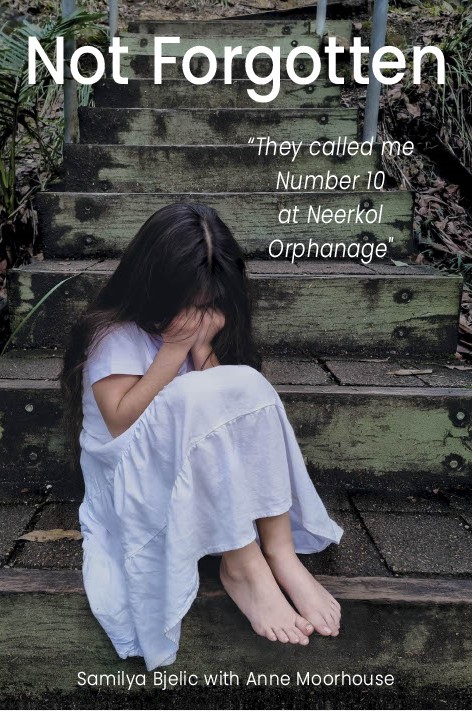
The signs were by the Child Safe Movement who aim to stop “orphanage tourism” which contributes to separating children from families and often supports unscrupulous operators. A few years ago, while writing Not Forgotten: They called me number 10 at Neerkol Orphanage I visited the Little Flower Orphanage in Beijing, which is not open to tourists. I have long wondered whether volunteering or visiting orphanages is beneficial for the children living there.
Children are not tourist attractions. Would it have helped if I insisted on buying the necklace from an adult at the Karen village? Perhaps the offering was the moment of reflection and learning.
Sunrise over Angkor Wat, Siem Reap
Our Cambodian bike tour included a visit to Angkor Wat at sunrise. Despite the allure of the event, I dreaded the 4.40am pick up. For a night owl like me that’s torture. I tiredly sat in the dark waiting for the sunrise and was blessed to see it gently rise behind one of the most spectacular buildings on the planet. The following day our guide emphasised how lucky we were, as for weeks prior the sunrises had been consistently dulled due to cloud cover.
As I post this I’m waiting for the plane home, appreciative of all that we have been offered and accepted on this amazing trip.
If this story resonated with you, you might enjoy another moment from my travels.
This month, I’ve spent hours talking with friends and family about getting old and dying. It’s such a fun topic when you’re on holiday. Yet, discussing ageing and death is now part of the narrative of my life. At 68, if the media interviewed me, I would be considered an “elderly retired grandmother”. Not that I feel like that. When I was a young mum, I talked about babies and toddlers. Then I lamented with anyone who would listen about wayward teenagers. After those teenagers became adults and left, I discussed work. Now that I’m retired many conversations are around planning holidays, grandchildren, the state of the world, getting old, and death. It’s a bit like the Organ Recital, where we oldies discuss our ailments.
I understand ageing and dying are challenging topics, but I’m both surprised and saddened at the lack of preparation that many people put into this journey. It seems to me that they would prepare more for a long weekend away.
Here are three big questions that I think we need to ask ourselves:
Where am I going to live?
Most people want to age in their own home. I certainly do. What does this mean though? Does it mean staying in the house you raised your children in, or does it mean moving to a home that is more suitable for this time of your life? If you choose to stay in your home, are there alterations you can make to maximise your ease and enjoyment? Perhaps it’s as small as installing grab rails or as big as moving the laundry upstairs. It’s a challenge managing the conflict of wanting to stay as active and independent as possible, while also preparing for an unclear future.
My 92-year-old father-in-law and 90-year-old mother-in-law live independently in their family home. They have made some alterations like adding a step elevator for the front steps and installing grab rails and a bidet in the bathroom. They have help in the garden and a cleaner. Their home remains perfect for them, close to family and the community they have lived in all their lives. However, I decided I needed to move after falling down my internal stairs four years ago and breaking my ankle. I no longer wanted to live in a two-storey house on a steep block. Now we live in a flat-on-the-ground house which gives me easy access to the outside. I am more active here than I was in the other house. We only moved 600 metres, so we too are still in our community.
When did you last walk through your house and really look at it, thinking about how suitable it is for the next stage of your life? The thought of making changes or moving is anxiety-provoking but not as distressing as having to quickly make important life decisions in a health crisis.
The reality is, many of us are likely to need help if we want to age in place, whether it’s someone to do the gardening, cleaning, laundry, make beds, provide meals, or help with transport. I’d rather accept some help in my own home than be in an aged care home.
Who’s going to make decisions about my health if I can’t?
It’s unimaginable that I won’t be able to make decisions for myself, but I have seen the consequences of not planning for this possibility. At 65 years old, a friend had a stroke and was unable to make decisions for himself. After an initial hospital stay, he was moved to an aged care home. His family and friends had to make an application to the Guardianship and Administration Tribunal, so a guardian to manage his affairs could be appointed. Until this happened no major decisions could be made about his assets, and funds needed for his care were limited. My friend also had to be medically assessed as not having the capacity to make important health and personal decisions as evidence for the tribunal. These stressful and lengthy medico/legal processes would have been avoided had he prepared an Enduring Power of Attorney when he was well.
An Enduring Power of Attorney is a legal document where you appoint someone to make decisions on your behalf if you are unable to. This person is called the Attorney. While you are well you can choose who will best be able to manage your health care and assets, including paying bills and selling real estate. This is an important decision and if there is no one you know who can undertake this role then you can appoint the Public Trustee.
Imagine how stressful it would be for friends and family if you did not have an Enduring Power of Attorney, and they were unable to act rapidly in your best interests in a crisis.
What’s going to happen to all my stuff when I’m dead?
We all have “stuff”. It seems to accumulate no matter how many clean-outs we have. Some of that “stuff” is valuable, like your home, financial investments and other assets. I’m sure family and friends will select sentimental mementos when I’m gone, but they won’t want most of my chattels and I’m ok with this. However, although I plan to spend as much of my money as I can before I die, I do want to choose who will receive any remaining financial assets. The best way I can ensure this will happen as I wish is to make a Will.
A Will is a legal document that states who will receive your property and possessions after you die. At least one person must know where your Will is. This is usually someone that you have appointed as Executor during the process of making the Will. Here are a few links to Wills but get legal advice.
Preparing for aging and dying doesn’t start when you’re old. In fact, it’s more important to plan when you’re young. If you’ve got kids or have a home, then you better have an Enduring Power of Attorney and a Will. Imagine if something happened to you and grieving children and spouses didn’t know your wishes. A hard time made unnecessarily more difficult.
What are you doing, or not doing, to plan for getting old and dying?
P.S. I’m well and healthy!!
Postscript: I friend on Facebook made this comment and I thought it was worth adding
The lawyer in me says to look over your wills every few years to check they reflect the changes that occur in your lives and update if necessary.
It’s also important to have an Advance Health Directive (sometimes known as a living will) which outlines your preferences for care and medical procedures/interventions and appoints someone to make decisions regarding your health on your behalf, in the event you lose capacity to do so yourself.
Again like a will it should be reviewed every few years or if circumstances change.
I’m drawn to the tall bold totem poles found in many indigenous cultures. Seeing the ornately carved and painted ones in Alaska and Canada in 2024 inspired me to make totems for my suburban Brisbane garden. My totems couldn’t just be artistic; like all totems, they would have to represent history, values, spirit and community.
Can’t carve, draw or sculpt!
Only one problem prevented me from creating my first totem—I can’t carve, draw, or sculpt, but why let a lack of artistic skills get in the way of creativity or a grand project?
Preparing for the Moorhouse Totem
My first totem would be an homage to the Moorhouse family. I decided Christmas Day 2024 would be the perfect day to create my totem as I would have both the oldest and youngest members of the Moorhouse family present. Arthur, at 92, is the patriarch of the family. Leo, not yet two, is the youngest of his nine great-grandchildren. With them and 11 other family members present, I would have a captive audience to help me create my totem.
In preparation, I painted a PVC pipe (100 mm in diameter and 3 meters long). I needed a variety of colored paints for my project, but I only needed a handful of each color. As I was reluctant to buy 13 tins of paint, I requested leftover paint from my local Buy Nothing Facebook group. This generous group gifted me the paint I needed.
Hands across time
After lunch on Christmas day, I herded the family to my totem site and started painting hands, the youngest first, the oldest last. All chose a colour. One by one we placed our painted hands around the painted pipe, creating our Moorhouse totem. At the top were Arthur and Rhonda, 92 and 90 years old. Next, were Steven and me. How rapidly the years have passed, now we are close to the top of the family tree.
The totem handprints include one of Arthur and Rhonda’s children, three of their grandchildren, four of their great-grandchildren and three extraordinary daughters-in-law who have birthed and cared for this tribe.
A friend who was with us on Christmas day is a calligrapher and added the finishing touches.
A perfectly imperfect totem now graces my garden.
After our 2025 trip back to New Zealand, I’m planning my next totem, though it’s been suggested I use the Māori name Pouwhenua or pou whenua.
Leo lifts the brass latches of the 100-year-old cabin trunk, opens the lid and climbs inside. At 18 months old Leo is unaware that the trunk belonged to his great-great-grandmother Purthanry Thanes Mary Cutts. While he explores, I run my hands gently over the aged leather lid and embellished corners, allowing myself to daydream of luxurious travel aboard a grand cruise liner.
I met Purthanry, my husband’s paternal grandmother when I was 30 and she was in her 80’s. Like the trunk, she had an aura of elegance and sophistication which I found somewhat intimidating even as she welcomed me warmly into the family. I was unaware of the trunk until after her death. Then I coveted it. The trunk is a precious family heirloom and a connection to my love of travel. It took 20 years for Purthanry’s son Arthur, my father-in-law, to bestow care of the trunk to me. Finally, and somewhat reluctantly, he carefully loaded it into his car, drove from Nowra to Brisbane and delivered it.
A ticket to the “old country” and a cabin trunk
The cabin trunk, stamped in gold with Purthanry’s initials and surname, was a 21st birthday gift from her parents, Thomas and Mary Cutts. A return ticket for a sea voyage to the UK accompanied it. For Purthanry, born 3 May 1901, a Sydney girl of convict stock, the trip to the “old country”, England, would have been an exciting and expensive gift. The trunk and voyage marked her family’s success and status.
In 1836 at age 25, John Boden Yeates, Purthanry’s great-grandfather, was transported to Australia for seven years. He was found guilty of stealing a handkerchief from a gentleman’s pocket. The handkerchief was valued at one shilling, about a day’s wages. He arrived in Australia as a manacled prisoner, yet Purthanry departed Australia, less than a hundred years later, as a poised and accomplished young woman.
We know little about the trip except that Purthanry, an only child, travelled to meet her uncle, Frank Cutts, in England. I imagine sharing afternoon tea with Purthanry. She would pour tea from a beautiful floral bone China teapot adding milk from a matching jug. Sitting at her dining room table she would answer all my questions. I long to know what she packed into that trunk and whether a chaperone accompanied her.
Looking through the mirror of the past
Purthanry had returned home by 1928 when she married Frank Moorhouse at 27. Purthanry, a Girl Guide Captain, and her Guides, approached Frank at Mosman ferry wharf while selling tickets to a ball. Initially Frank refused the tickets as he did not have a partner, however, the resourceful Guides assured him they could organise the perfect date. Purthanry and Frank attended the ball together.
The couple moved to East Street, Nowra, living in a home they called Amaroho. Some of Purthanry’s first acquisitions were a beautiful dressing table and chamber pot commode cupboard which stayed with Purtharny until her death at 95. When I received the cabin trunk, my son and his English wife took possession of the dressing table and cupboard which are now part of Leo’s daily life. Arthur remembers his mother brushing her long hair at the dressing table. She always tied her hair up in a bun. Purthanry dressed formally with minimal makeup and never wore trousers or shorts.
Purthanry worked alongside Frank as he set up his business Moorhouse the Machinery Man. She had three sons, Owen, Arthur and Frank. Arthur recalls her closest friends were single women, referred to as “old maids”. An Aboriginal housekeeper, Belle Brown cared for the family.
Purthanry dedicated her life to the community including the Girl Guides, Country Women’s Association, Red Cross, Crippled Children’s Association, Church of England, and as a Rotary wife (women were not allowed to be members at that time). In 1990 Purthanry received the Order of Australia for service to the community. She also received a Shoalhaven Citizen of the Year Award and the Paul Harris Fellowship Award for her contribution and dedication to Rotary.
Purthanry continued to travel, often to international Rotary conventions, albeit without her cabin trunk.
Where will life take you Leo?
Postscript:
After I posted this blog I received further information from Owen Moorhouse, Purthanry’s oldest son who is now 95.
Dear Anne
Thanks for the travel trunk story (also called Cabin Trunk). The trunk took Mum to London by RMS Oronsay Passenger Liner, a 6-week trip. She stayed with GrandPa Cutts’ sister, Aunt Polly. Aunt Polly was a trained nurse of the Florence Nightingale school.
Mum couldn’t have chosen a more disadvantaged time to visit Britain. Winston Churchill had recommended a return to the gold standard (a monetary system in which the value of a country’s currency is directly linked to gold) . This increased the value of £STG which devalued the £AU The £STG increase made British goods dearer which in turn put many out of work. Overall, it produced a difficult financial situation for colonial visitors.
In 1988 I moved to Nowra, Frank’s hometown when I married his nephew, Steven Moorhouse, and joined the Moorhouse clan. Arthur Moorhouse, Frank’s brother is Steven’s father.
I was a young woman entering the Moorhouse family, not yet a mother nor a psychologist but I was busy becoming both. Birthdays and Christmas included Frank and Arthur’s parents, Purthanry and Frank senior who warmly welcomed me into the family. I did not pay much attention to the fact that Frank and the oldest brother Owen were not at family events. Indeed I did not meet Steven’s cousins, Owen’s children, until much later in my life.
Slowly Frank became this mysterious person to me. He was part of the family but rarely spoken about or seen. I knew that he was a renowned author and as an avid reader, it was not long before I was drawn to his books, starting with the Electrical Experience. My mind exploded because surely I was reading about our family! T. George McDowell, the central character in the Electrical Experience had to be based on Frank senior, who was also an electrician, business owner, pillar of the community, avid Rotarian, and living on the South Coast. Was the conflict T George McDowell experienced with his daughter reflective of his relationship with Frank?
How were these weird, wonderful, sexually explicit, utterly compelling stories born of this conservative and traditional family in this small country town? I never heard Frank’s parents speak about his books, and I do not know if they read any of his work. Oh, how I wished I’d asked them.
Arthur tells me Frank senior would describe the books as “earthy” and that Purthanry never spoke of them however she kept a stash of newspaper clippings from whenever Frank was featured.
Steven recalls his parents had a copy of the American’s Baby, bound in brown paper in his home. It seems like shame and pride lived side by side in the family’s relationship with Frank, a difficult space for all to navigate.
We moved far from Nowra and we saw very little of Frank, though we have a signed copy of Loose Living from 1995 which I vaguely recollect him giving to us when we were visiting one Christmas.
Steven gifted me The Inspector General of Misconception when I obtained my Australian Citizenship in 2002 – writing “what better way to start your Aussie life”. There was Frank again, of my life, but not in my life.
Connecting with Frank Moorhouse
Our connection to Frank strengthened when I wrote Not Forgotten: They called me Number 10 at Neerkol Orphanage. Arthur insisted that I send Frank the manuscript for review. I was reluctant to impose on this literary great and elusive uncle, and also fearful of the feedback I would receive. Arthur rang Frank in my presence and told Frank that the manuscript was on its way. I couldn’t back out. I doubt that I would have sent it without this push, and am so grateful to Arthur.
Frank’s generosity both humbled and emboldened me. He read the manuscript quickly, taking time to point out errors and discrepancies. Frank rightly questioned my futile need to create a rosy ending. He supported and encouraged me and then he referred me to his agent!
Dear Jo, as you know I am very careful about who I recommend to the Agency.
I rarely read manuscripts that are sent to me or when I am asked to read them — even by friends, especially friends.
But my niece-in-law Anne Moorhouse who is a therapist psychologist asked me to read this rather unusual non-fiction book Number 10 from Neerkol and I agreed to do so.
I have now read it and think that this could be a very important book.
It tells the story of Samilya, an orphaned and abused child, and her attempts throughout her life to find stability and peace with herself, to raise a family, and to gain compensations for her abuse. It is told partly by Anne and partly by documents, diaries, blogs, letters, and the words of Samilya herself and those around her.
I feel that it is powerful, well-constructed, affecting, but at times, gruelling, and, it is, of course, timely.
Would you be prepared to read it and consider it for publication? If so would you like the entire ms or the usual three chapters?
Very best, Frank
Frank warned me that his name would both open and close doors for me. Sadly, despite being recommended by the great Frank Moorhouse, and some initial interest I did not find a traditional publisher. I self-published, entering a literary world unknown to Frank. Frank’s recommendation kept me going and I repeatedly read his email, and others he sent when I lost hope. I told myself if Frank thought it was worth publishing, then I should do it. In 2021 I proudly sent Frank a copy of my book.
Franks Memorial
Frank’s life was remembered and celebrated by his family and friends at the State Library of New South Wales on 13/7/2022. I wonder what Frank would have thought of this coming together in his death of the many people who had loved him. In his life, he had kept family and friends separated.
As I listened to his friends speak I realised how little I knew of this complex man, and wished I had enjoyed more time with him. His friends spoke of his generosity to writers which I had experienced. They spoke of his boldness, curiosity, humour, and dedication to his craft which is evident in his work. They highlighted his advocacy for copyright laws to ensure that Australian creators receive royalties for the copying and sharing of their work.
Family and friends spoke of Frank’s love for the bush and his habit of taking himself off, often alone, for extended periods of time. I remember Arthur worrying about Frank during the sojourns to the bush. He was always relieved to know Frank had returned. Frank’s ashes will be scattered in his beloved Budawang Range.
The memorial speeches were bookended by two great men. Firstly Arthur Moorhouse, grieving and loving older brother, reflected on the lives of three boys together in Nowra and the early days of Frank’s career. Tom Keneally, Australian novelist, playwright, essayist and actor paid homage to Frank’s literary legacy and noted that Frank’s courage had changed not just the literary landscape of Australia but that he had also been a trailblazer for LBGTIQ+ understanding and acceptance in Australia.
All spoke of Frank’s love of long lunches and martinis. A few years ago we’d joined Frank for a long lunch at his beloved Automobile Club.
The Moorhouse Martini
So I’ll finish now and let you wander off to make a Moorhouse Martini. The recipe was sent to me by Frank’s niece, Karin Moorhouse. Karin also experienced Frank’s generosity to writers when she wrote No One Can Stop the Rain.
Here it is! …the recipe for Frank’s famed “Moorhouse Martini 🍸 “.
It once appeared on the bar menu at Bayswater Brasserie in Kings Cross, once a favourite lunch venue of Frank’s.
The Moorhouse Martini:
2 parts gin (London Dry Gin, or Bombay Sapphire)
0.5 parts dry vermouth (Noilly Prat)
Green olive on a toothpick
The trick is to make sure the glasses are kept in the freezer until the moment of pouring. Use ice in the cocktail shaker. As cold as possible.
Sometimes he liked a “dirty martini.” Just add one or two teaspoons of olive juice to the glass after pouring.
As the pandemic hit Australia I submerged myself in learning to crochet and making six Pandemic Christmas Wreaths. I finished them when I was forced into lockdown due to a broken ankle.
A Pandemic Christmas Wreath of Connection and Optimism
Remember those first weeks of lockdown early in 2020, before we got jaded and screened out? That’s when it was still fun to do zoom calls. I hadn’t yet done 8 weeks of telehealth as a psychologist and wondered how many tears I had missed.
Like many others we connected with family overseas, particularly my nephew and his wife from Wellington, New Zealand. They had visited us in January 2020 with their gorgeous baby son. New Zealand entered a harsher lockdown than we did in Australia at that time so we supported each other by catching up on Zoom, playing trivia quizzes, sharing lockdown stories and Covid-19 stats. It was during one of these zoom calls that I launched my Christmas Pandemic Wreath project. I stitched love for my New Zealand family into to this wreath along with my hope that, as they hang the wreath each Christmas, they would look back at 2020 as a year of connection and optimism.
A Pandemic Christmas Wreath of Grief and Love
The impact of the pandemic hit my son and his fiancé with an unexpected ferocity. She was unable to return to the UK for her mother’s funeral and her sister’s wedding was cancelled. The ease of living overseas, where a trip home is just a day and some hard earned money evaporated overnight. If she went home for the funeral, she would not be able to return to Australia. I’m so glad she stayed. I’m also glad they had travelled to see her mum when she was ill earlier in the year.
There is no way my son and his fiancé will forget 2020. As they hang this wreath each Christmas I hope they honour their grief and remember the love they share together, with others who are not always present, and that we share it with them.
A Pandemic Christmas Wreath of Grit and Thankfulness
I worried more as I stitched this wreath. My daughter and her partner were locked down in Melbourne. Basically they’d been in lockdown since 21 March 2020 and restrictions didn’t begin to ease until November 2020. I worried about their mental health, their relationship and their jobs. While they found it tough they also flourished creating art, furniture and gourmet meals. They embraced a buy local strategy and our birthdays were celebrated with bundles of gifts found within a 5 km ring of where they lived.
The Melbourne lockdown saved Australia from a rampant attack by Covid-19. This wreath embraces the thanks I have for all Victorians who kept the rest of us safe. I hope when my daughter and her partner hang this wreath each Christmas, they look back with pride at the intense time they spent together, the determined grit they displayed, and all they achieved and created.
A Pandemic Christmas Wreath of Family Resilience and Caring
This wreath is for Ms Forgotten Australian’s youngest daughter’s family who hold a special place in my heart. The family underwent 4 Covid tests this year, whereas I had none. Like any family, the kids, 4 and 6 years old, bought home coughs and colds which resulted in multiple tests. I don’t know any child who looks forward to having a stranger stick a swab up their nose! It takes fortitude and integrity to turn up for yet another Covid test with fearful children, who probably just have a cold.
Families like them helped keep Brisbane safe. This family, like many others, coped with disruptions to their home, work, school and leisure routine and yet they continued to care for the vulnerable in their community. They got on with the task, complaint free, resiliently adapting to the changes. As they hang the wreath each Christmas I hope they remember their collective resilience and the way they cared for each other through this time.
A Pandemic Christmas Wreath of New Beginnings
Our nephew, his pregnant wife, their 9 month and 4 year old daughters started the year living with us as they made the move from Sydney to Brisbane. Then they bought a new home, he started a new job, she upstaged him by giving birth to a new baby girl during Covid, and of course were separated from interstate family. Its been lovely watching their excitement and joy at each new adventure. As they hang their wreath each Christmas, I’m sure they will remember the many new beginnings of 2020, not just that they lived through a pandemic.
A Pandemic Christmas Wreath of Friendship
As I stitched this wreath, I thought of the times we have shared with these friends this year. We started this year together in South America, a lifetime ago. While there we watched the fires burn in Australia, never thinking that this would be just the beginning of a year like no other.
As the Covid-19 raged, we were separated from family and supported each other.
As family members broke bones, we checked in with each other! Thanks for the loan of the crutches!
Together we snuck a brief holiday to Caloundra, not a destination we would normally have chosen, usually planning trips much father away. As we walked and talked, it helped eased the stress of the year.
As they hang this wreath at each Christmas, I hope it reminds them of our friendship, the good times we’ve shared and how we survived a pandemic!
Inspiration
My wreaths were inspired by Lucy at Attic 24. She’s amazing. You can find her patterns and inspiration here Attic24: Crochet (typepad.com)
Merry Christmas to all
I could make more wreaths, as I am blessed with family and friends who have helped me endure the devastation of the Australian bushfires, the pandemic and now a broken ankle, but I think I’m done. Lets hope 2021 is remembered as a time we all paused, focused on what we want for our lives and made some lasting changes.
I hope you all made the most of Christmas, wherever you were, whoever you were with.
We celebrated my brother’s 60th birthday with Takaro Trails three-day self-guided cycling tour of the Hawkes Bay in New Zealand. There were four of us over 60, and one young man of 59, my husband Steven. While laughing, riding and celebrating life “active, balanced and connected” became my mantra for healthy ageing.
Active
Riding through the Takaro Trails I contemplated the opportunities in my life to remain active.
Keeping my mind active will be easy, I hope. I love to read, listen to podcasts, write and play computer games. Social injustice still fires me up and I’m curious about the world. I delight in talking to young people and discovering their views. Even though my adult kids roll around the floor laughing at me, I enjoy learning new technology and embrace social media. I still work part-time as a psychologist and I remain committed to my professional development. I’m inspired by the hopes and dreams of colleagues and clients.
Keeping my body active will be more of a challenge. Despite this bike trip, and that I also rode the Otago Rail Trail, I’ve never particularly enjoyed exercise, yet I know how essential it is. I do enjoy an easy cycle at the weekends and have sometimes regularly ridden my bike to work. I dabble in a bit of yoga, and I particularly like Yoga with Adrienne’ videos. Some mornings I manage to get myself out for a walk. My most active engagement in group exercise was through NIA dance and exercise classes. I kept that up for two years and will probably return to the welcoming group. Pottering in the garden brings me great pleasure and is another of my active pastimes. I purposefully increase my incidental exercise too, often parking Continue reading →
It’s Mother’s Day this Sunday in Australia. A day when many families come together to rejoice in the loving bond between mothers and children. A day to celebrate the blood, sweat and tears that ooze out of mothers while raising children. But for some families, it’s a day of heartbreak. There will be no bunches of flowers or boxes of chocolates. Adult children and parents can become estranged to each other. That’s tough.
Those that choose to break the relationship with their parent or child, often see it as a move of self-preservation. For some reason, the family dynamics have gone awry and the person, unable to stand the emotional turmoil, chooses to leave. A broken attachment can feel calmer and safer Continue reading →
 My gorgeous grandson, Leo, was surrounded by his adoring great-grandfather, grandfather and father. The love for him radiated from these three men. Watching them, I wondered how the experience of becoming a dad had shifted across the three generations.

 Three generations of men becoming dads, three very different worlds, and one shared moment: holding their newborn child for the first time.

 The oldest boy is my great-nephew. He is my sister’s grandson, visiting from New Zealand with his parents for a lovely long weekend of family connection and to join our annual Christmas Carols extravaganza. I visited my sister in New Zealand in January 2025. At 79 years old, she was living at home with her husband, and while she seemed somewhat withdrawn and a little confused, life was much like it had been for many years. I had an underlying sense of disquiet and gently encouraged her to
  An ordinary day, but not an ordinary moment. It’s a moment heavy with meaning—a snapshot of family history, love and loss. A moment that rewards every effort to show up for these children, and honours the trust their parents place in us. A moment that whispers: This is what matters.
 In Thailand and Cambodia people make offerings to spirits every day to create positive karma. We, as tourists, must have been included in their wishes for happiness and well-being as we’ve had a fortuitous trip.
 We anticipated a spectacular but busy day at the Grand Palace as we joined the throng of tourists channeled through the entrance gates. We followed the crowds along the designated path to the resplendent buildings. Pausing to gain our bearings we found ourselves in front of a small sign offering a “Free English Tour at 10.30 am”, it was 10.27 am. Our unplanned morning allowed us to be here at exactly the right time and place. There were thousands of people visiting the Grand Palace that day but we joined a group of just three others. We enjoyed a funny, informative tour, with a guide who spoke excellent English and happily answered our questions.
 We had no idea Chiang Mai held a spectacular annual flower festival for three days in February. On our second morning in Chiang Mai we caught a glimpse of one colourful exhibit as we drove past on our tour. After discovering it was the last day of the festival, and although we were hot and bothered that evening, we dragged ourselves along to Suan Buak Haad Public Park. There we were treated with an exotic array of 25 large parade floats ornately adorned with flowers, petals and plants. It was an elaborate celebration of botany, art and culture.
 We gladly accepted the invitation to go to Koh Samui with our daughter-in-law, son and grandson where we would be joined by three of her sisters from England. With their partners and children we would become a party of 15. We built our trip to Thailand and Cambodia around the week we would meet the family.
 The Giant Puppet Project, Siem Reap
 There was one offering I should have refused. A tour in Chiang Rai included a trip to the village of the long-necked Karen people. These colourfully dressed tribal women traditionally wear heavy metal rings around their necks. As refugees from Myanmar they have no right to work, education or health care in Thailand. We paid a fee to enter the village and the women sat outside their shops posing for photos.
 Ten days later in Siam Reap, a sign on the back of a toilet door in
  Our Cambodian bike tour included a visit to Angkor Wat at sunrise. Despite the allure of the event, I dreaded the 4.40am pick up. For a night owl like me that’s torture. I tiredly sat in the dark waiting for the sunrise and was blessed to see it gently rise behind one of the most spectacular buildings on the planet. The following day our guide emphasised how lucky we were, as for weeks prior the sunrises had been consistently dulled due to cloud cover.
 This month, I’ve spent hours talking with friends and family about getting old and dying. It’s such a fun topic when you’re on holiday. Yet, discussing ageing and death is now part of the narrative of my life. At 68, if the media interviewed me, I would be considered an “elderly retired grandmother”. Not that I feel like that. When I was a young mum, I talked about babies and toddlers. Then I lamented with anyone who would listen about wayward teenagers. After those teenagers became adults and left, I discussed work. Now that I’m retired many conversations are around planning holidays, grandchildren, the state of the world, getting old, and death. It’s a bit like the
  My 92-year-old father-in-law and 90-year-old mother-in-law live independently in their family home. They have made some alterations like adding a step elevator for the front steps and installing grab rails and a bidet in the bathroom. They have help in the garden and a cleaner. Their home remains perfect for them, close to family and the community they have lived in all their lives. However, I decided I needed to move after falling down my
  It’s unimaginable that I won’t be able to make decisions for myself, but I have seen the consequences of not planning for this possibility. At 65 years old, a friend had a stroke and was unable to make decisions for himself. After an initial hospital stay, he was moved to an aged care home. His family and friends had to make an application to the Guardianship and Administration Tribunal, so a guardian to manage his affairs could be appointed. Until this happened no major decisions could be made about his assets, and funds needed for his care were limited. My friend also had to be medically assessed as not having the capacity to make important health and personal decisions as evidence for the tribunal. These stressful and lengthy medico/legal processes would have been avoided had he prepared an Enduring Power of Attorney when he was well.
  We all have “stuff”. It seems to accumulate no matter how many clean-outs we have. Some of that “stuff” is valuable, like your home, financial investments and other assets. I’m sure family and friends will select sentimental mementos when I’m gone, but they won’t want most of my chattels and I’m ok with this. However, although I plan to spend as much of my money as I can before I die, I do want to choose who will receive any remaining financial assets. The best way I can ensure this will happen as I wish is to make a Will.


 Leo lifts the brass latches of the 100-year-old cabin trunk, opens the lid and climbs inside. At 18 months old Leo is unaware that the trunk belonged to his great-great-grandmother Purthanry Thanes Mary Cutts. While he explores, I run my hands gently over the aged leather lid and embellished corners, allowing myself to daydream of luxurious travel aboard a grand cruise liner.
 I met Purthanry, my husband’s paternal grandmother when I was 30 and she was in her 80’s. Like the trunk, she had an aura of elegance and sophistication which I found somewhat intimidating even as she welcomed me warmly into the family. I was unaware of the trunk until after her death. Then I coveted it. The trunk is a precious family heirloom and a connection to my
  Purthanry had returned home by 1928 when she married Frank Moorhouse at 27. Purthanry, a Girl Guide Captain, and her Guides, approached Frank at Mosman ferry wharf while selling tickets to a ball. Initially Frank refused the tickets as he did not have a partner, however, the resourceful Guides assured him they could organise the perfect date. Purthanry and Frank attended the ball together.
 The couple moved to East Street, Nowra, living in a home they called Amaroho. Some of Purthanry’s first acquisitions were a beautiful dressing table and chamber pot commode cupboard which stayed with Purtharny until her death at 95. When I received the cabin trunk, my son and his English wife took possession of the dressing table and cupboard which are now part of Leo’s daily life. Arthur remembers his mother brushing her long hair at the dressing table. She always tied her hair up in a bun. Purthanry dressed formally with minimal makeup and never wore trousers or shorts.

 Frank Moorhouse was on the periphery of my life.
 Connecting with Frank Moorhouse
 Franks Memorial
 Remember those first weeks of lockdown early in 2020, before we got jaded and screened out? That’s when it was still fun to do zoom calls. I hadn’t yet done 8 weeks of telehealth as a psychologist and
  The impact of the pandemic hit my son and his fiancé with an unexpected ferocity. She was unable to return to the UK for her mother’s funeral and her sister’s wedding was cancelled. The ease of living overseas, where a trip home is just a day and some hard earned money evaporated overnight. If she went home for the funeral, she would not be able to return to Australia. I’m so glad she stayed. I’m also glad they had travelled to see her mum when she was ill earlier in the year.
 I worried more as I stitched this wreath. My daughter and her partner were locked down in Melbourne. Basically they’d been in lockdown since 21 March 2020 and restrictions didn’t begin to ease until November 2020. I worried about their mental health, their relationship and their jobs. While they found it tough they also flourished creating art, furniture and gourmet meals. They embraced a buy local strategy and our birthdays were celebrated with bundles of gifts found within a 5 km ring of where they lived.
 This wreath is for Ms Forgotten Australian’s youngest daughter’s family who hold a special place in my heart. The family underwent 4 Covid tests this year, whereas I had none. Like any family, the kids, 4 and 6 years old, bought home coughs and colds which resulted in multiple tests. I don’t know any child who looks forward to having a stranger stick a swab up their nose! It takes fortitude and integrity to turn up for yet another Covid test with fearful children, who probably just have a cold.
 Our nephew, his pregnant wife, their 9 month and 4 year old daughters started the year living with us as they made the move from Sydney to Brisbane. Then they bought a new home, he started a new job, she upstaged him by giving birth to a new baby girl during Covid, and of course were separated from interstate family. Its been lovely watching their excitement and joy at each new adventure. As they hang their wreath each Christmas, I’m sure they will remember the many new beginnings of 2020, not just that they lived through a pandemic.

 We celebrated my brother’s 60th birthday with
  Keeping my body active will be more of a challenge. Despite this bike trip, and that I also rode the
 It’s Mother’s Day this Sunday in Australia. A day when many families come together to rejoice in the loving bond between mothers and children. A day to celebrate the blood, sweat and tears that ooze out of mothers while raising children. But for some families, it’s a day of heartbreak. There will be no bunches of flowers or boxes of chocolates. Adult children and parents can become estranged to each other. That’s tough.