Today is our fortieth wedding anniversary. Our story begins on a Friday night at a packed bar, with a tall man, a business card and a borrowed pen. As I reflect on the events that shaped our relationship, I’m bursting with gratitude for the adventurous, love-filled life we’ve shared.
We met

Friday night, January 1984, at the Umbrella Bar, Sydney. My friend Angie and I were out on the town. Angie liked tall men; he was standing next to a tall man. The four of us spent the night flirting. He gave me his business card and said, “Call me”. I said, “No, you call me”. He borrowed a pen and took my number. I waited, hoping the phone would ring. It did.
Me
A Kiwi girl living in Sydney, already married and divorced twice at 28. Well-travelled, yet with limited insight into the chaotic relationship choices I was making.
Inadvertently, I’d started dragging myself out of the negative relationship cycle by embarking on a learning journey. I completed a six-month course on Communicating and Relating, an intense foray into understanding myself. I was studying Personnel Management two nights a week at TAFE. That education quietly reshaped me — strengthening my confidence and sense of self.
He
A Nowra boy living in Sydney, 25 years old, newly separated and about to graduate with a Bachelor of Business, having studied part-time for six years while working full-time as a Merchant Banker. He planned to travel and be free.
He left – and I waited.
Nine months after we met, he took off to see the world, making memories in Europe and Turkey without me.
I needed to become stable and independent, so I kept working, studying, and waiting.
Our relationship grew through flimsy blue paper aerograms – brief pages of longing and hope. Sporadic long-distance phone calls fuelled the torturous yearning, but we both needed the slowness that distance provided.
I joined him in the USA. We reunited at the San Francisco airport, but we had a backup plan for unforeseen events. There were no mobile phones in those days, so I promised, “I’ll wait for you on the steps of the Australian High Commission every day at 10 am if you don’t make it to the airport.”
We spent a month secluded in our hired Chevy Camaro, driving from San Francisco to New Orleans.
I returned to Sydney and waited some more. He kept travelling.
He came back
Finally, after 8 months, he came back and moved in with me in Sydney. He finalised his divorce. I completed my Certificate in Personnel Management.
We left
We planned a life together. Nowra seemed better than Sydney for raising kids, so we moved there and bought our first home. He worked for his parents, fixing water pumps and milking machines. He completed his electrical apprenticeship.
I took advantage of a magic moment in time where, even as a New Zealander, I could attend university for free and receive Austudy. Thank you, Gough Whitlam, for free education; you absolutely changed my life. I completed my Bachelor of Psychology, a Lifeline Telephone Counselling course and a Childbirth Education qualification.
 We got married
On 29th March 1986, just two years after we met, we married in his parents’ lounge. We melted our old wedding rings to create new ones, forging the future from the past.
We left again
In the small town of Nowra, we had two beautiful children, great family support and made good friends, yet I yearned for something different.
“Let’s live overseas,” I suggested. “Ok”, he replied.
His new job was as an Accountant for an electrical company in Lae, Papua New Guinea. Looking back, I can’t quite fathom why I thought moving from Nowra to Lae — an even smaller, more isolated town — would offer me more. I bought the book, “Where There Are No Doctors”, and packed it along with my 18-month-old and 3-year-old children. Spouses were generally unable to work in PNG, yet I worked for 8 years while living there. Thank you again, Gough, for that free university degree.
He’d packed his saxophone and trumpet when we moved to PNG. I was bemused, as I’d never heard him play, except on the record that he’d made with a dance band when he was 15 years old. One night, at a party, he stood at the top of the stairs, saxophone to his lips, and the sexy sounds of the saxophone flew into my heart. I fell in love with him all over again. I was his greatest fan and the luckiest woman in the room.
He completed a Master of Business. I completed a Graduate Certificate in Training and Development.
We spent 8 years in Papua New Guinea as a family, four years in Lae and four in Port Moresby. My irrational desire to move led us to outstanding jobs, travel, learning opportunities and lifelong friends.

I Left Without Him
He was offered a great job, just as we’d decided to leave PNG. He asked, “How long could I live without him?” I left with the children to start our new life in Cairns. The kids and I embraced him at the airport every Friday night, and he flew out again on Monday mornings. A communication box kept us connected. The kids and I filled it with anything we needed to talk about when he came home – drawings, bills, invitations and school reports.
 I started a small business, became dissatisfied, completed my Honours in Psychology and became a psychologist.
After a frightening event in PNG, he came back to us permanently 2 years later.
He joined another band and bought a motorbike. The best gig ever was his band playing at a Harley-Davidson event. I was still his greatest fan.
We left again
When the children finished high school, it was time to leave again. The big city was calling.
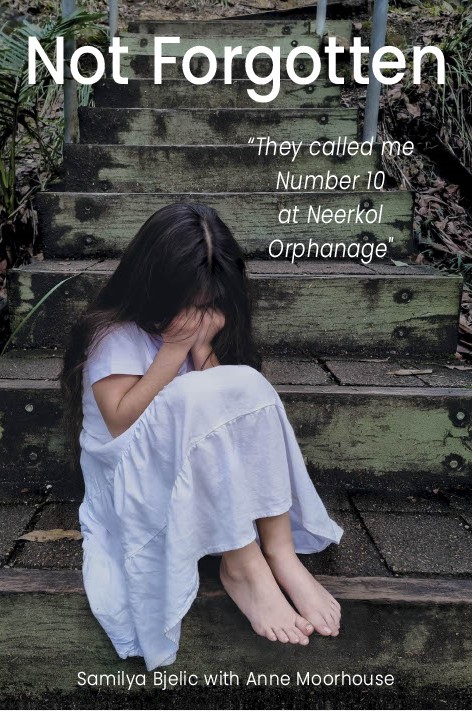
We moved to Brisbane as a family, and here he and I have stayed, though we have moved homes three times since arriving. He kept playing music, started cycling, and I wrote a book – Not Forgotten: They called me Number 10 at Neerkol Orphanage.
We kept old friends and made new ones. We had interesting jobs, took 6 months off to travel and enjoyed our lives.
Now we are both retired. We focus on loving our family, which has grown to include a daughter-in-law and two grandsons, connecting with friends, keeping healthy, and being stimulated. He’s still cycling and playing music, and I’m still writing and madly creating coffee pod sculptures – Have you met Tall Black?
What worked for us?
After 40 years, here is what I know worked for us to build a strong, lasting marriage.
- We shared a focus on family, driving positive change, continually learning, ensuring joy was part of our lives, and valuing connection with friends. Work was important because it was interesting and the means to do what mattered to us.
- We each had space to enjoy solo activities, but we also loved sharing time. He is still the person I choose to spend most of my time with. I love his company.
 Our love is anchored by rituals: a kiss every morning, warm greetings when we arrive home, checking in with each other at the end of the day, dinner together, and a shared late-night cuppa. Friday nights are still fun nights. When we had young children and little money, it was fish and chips by the beach; now it’s dinners out, or maybe just a drink in front of the TV. Our annual Christmas Carols, where he plays the piano and leads the singing, and friends and family gather at our home, is a highlight of the year.
- We fit together well. I dream big – “let’s take six months off work and travel the world”. He makes the dreams happen, booking the travel and managing the money.
- We’re on the same team, cheering each other on, celebrating each other’s successes, and supporting each other in the harder times. We build each other up. We are undoubtedly the most important people in each other’s lives.
Thank you for bringing the music to my life, Steven. We share the best of lives. I’ve loved every one of the 14,610 days we’ve been married.
I still love Friday nights at a bar, but I have no interest in tall men, retirees don’t carry business cards, and I have a special pen in my bag, given to me by my children for book signings. He knows my number now.


 I knew my giraffe needed a new coat — something fun, something colourful, something that would bring him back to life. Coffee pods suddenly seemed perfect.
 Transforming thousands of coffee pods into a giraffe coat is not for the faint‑hearted. Here’s the process I perfected (or maybe endured):
 Now Tall Black stands in the garden, shimmering with colour, personality, and a touch of mischief. He’s become a conversation starter, a sustainability ambassador, and a daily reminder that beauty can come from the things we usually throw away.
 Tall Black has been such a joy that I’m itching for another challenge. Maybe a dragon. Maybe a peacock. Maybe something I haven’t even imagined yet.
 In Thailand and Cambodia people make offerings to spirits every day to create positive karma. We, as tourists, must have been included in their wishes for happiness and well-being as we’ve had a fortuitous trip.
 We anticipated a spectacular but busy day at the Grand Palace as we joined the throng of tourists channeled through the entrance gates. We followed the crowds along the designated path to the resplendent buildings. Pausing to gain our bearings we found ourselves in front of a small sign offering a “Free English Tour at 10.30 am”, it was 10.27 am. Our unplanned morning allowed us to be here at exactly the right time and place. There were thousands of people visiting the Grand Palace that day but we joined a group of just three others. We enjoyed a funny, informative tour, with a guide who spoke excellent English and happily answered our questions.
 We had no idea Chiang Mai held a spectacular annual flower festival for three days in February. On our second morning in Chiang Mai we caught a glimpse of one colourful exhibit as we drove past on our tour. After discovering it was the last day of the festival, and although we were hot and bothered that evening, we dragged ourselves along to Suan Buak Haad Public Park. There we were treated with an exotic array of 25 large parade floats ornately adorned with flowers, petals and plants. It was an elaborate celebration of botany, art and culture.
 We gladly accepted the invitation to go to Koh Samui with our daughter-in-law, son and grandson where we would be joined by three of her sisters from England. With their partners and children we would become a party of 15. We built our trip to Thailand and Cambodia around the week we would meet the family.
 The Giant Puppet Project, Siem Reap
 There was one offering I should have refused. A tour in Chiang Rai included a trip to the village of the long-necked Karen people. These colourfully dressed tribal women traditionally wear heavy metal rings around their necks. As refugees from Myanmar they have no right to work, education or health care in Thailand. We paid a fee to enter the village and the women sat outside their shops posing for photos.
 Ten days later in Siam Reap, a sign on the back of a toilet door in
  Our Cambodian bike tour included a visit to Angkor Wat at sunrise. Despite the allure of the event, I dreaded the 4.40am pick up. For a night owl like me that’s torture. I tiredly sat in the dark waiting for the sunrise and was blessed to see it gently rise behind one of the most spectacular buildings on the planet. The following day our guide emphasised how lucky we were, as for weeks prior the sunrises had been consistently dulled due to cloud cover.
 Noom our guide and Mr Sak the driver loaded us on to the tour van where we discovered this was to be a VIP tour for two. We drove out of Chiang Mai to the Buatong Waterfall-Chet Si Fountain National Park. After enjoying the park and warming our legs up with a hike down to the falls we met our bikes. I had anticipated a step through “woman’s” bike, not one with a bar across and I failed to lift my leg over. The only way I could mount my bike was to lay it on the ground to straddle it. After a wobbly test ride around the car park I was off.
 Yet it was wonderful to be slowly savouring the quiet countryside. We stopped to pat a family of water buffalo. We cycled by colourful and ornate temples and shrines dotted amongst the crops. Noom introduced us to women making soybean patties for local stores. They seemed delighted at the interruption to their day and happily demonstrated their skills.
 Morning tea of fresh mango and watermelon served beside a small, newly built temple, was my favourite space of the day. Set amongst the fields, isolated and serene as it glistened in the sun.
 My bike today felt familiar, I didn’t grip the handle bars quite so tightly, my shoulders relaxed and the day was cooler.
 On returning from the caves I discovered the sole of my shoe was coming adrift but resourceful Mr Sak pulled out a tube of glue and promptly fixed it.
 I thanked my e-bike as I cycled up one short steep hill, taking the lead and waiting in the shade for the other two to arrive. I would not have been able to do this without the power assistance the bike provided.
 A five minute cycle along a busy four lane road led us to a local market in Fang. As we wandered Noom named the unfamiliar produce and enticed us with a plate of marinated frogs. Noom also assured me we would soon be out of the traffic.
 A pattern to our days was emerging as we stopped for Thai iced coffee and had morning tea of fresh fruit and sticky rice beside a temple.
 The 33km ride felt easier today and we finished before lunch. I’m now more adept at mounting my bike. I can lift my leg higher and position the bike better but I’m still a long way from elegance.
 We loaded the bikes on a longtail boat and motored for an hour up the Mae Kok River with our skilled Captain navigating us through many rapids. Apart from two operating sand dredges early in the trip and one other boat our company for the morning were herds of water buffalo.
 We pulled up the riverbank and disembarked. There was no road, nor signs of civilisation. Noom told us the area had been changed by recent floods. After we all had a bush wee Noom set off on foot to find the road. He returned and we pushed our bikes through the scrub until we hit the remnants of a bush track. This led us directly into the grounds of a high school where the children waved and yelled at us as we cycled through.
 We rode on, over rutted dirt roads, relieved by small patches of concrete road. The hills were tough for Noom and Steven, but not for me as I powered ahead of them. We also had new riding challenges today, dodging low hanging branches and avoiding elephant poo.

 This month, I’ve spent hours talking with friends and family about getting old and dying. It’s such a fun topic when you’re on holiday. Yet, discussing ageing and death is now part of the narrative of my life. At 68, if the media interviewed me, I would be considered an “elderly retired grandmother”. Not that I feel like that. When I was a young mum, I talked about babies and toddlers. Then I lamented with anyone who would listen about wayward teenagers. After those teenagers became adults and left, I discussed work. Now that I’m retired many conversations are around planning holidays, grandchildren, the state of the world, getting old, and death. It’s a bit like the
  My 92-year-old father-in-law and 90-year-old mother-in-law live independently in their family home. They have made some alterations like adding a step elevator for the front steps and installing grab rails and a bidet in the bathroom. They have help in the garden and a cleaner. Their home remains perfect for them, close to family and the community they have lived in all their lives. However, I decided I needed to move after falling down my
  It’s unimaginable that I won’t be able to make decisions for myself, but I have seen the consequences of not planning for this possibility. At 65 years old, a friend had a stroke and was unable to make decisions for himself. After an initial hospital stay, he was moved to an aged care home. His family and friends had to make an application to the Guardianship and Administration Tribunal, so a guardian to manage his affairs could be appointed. Until this happened no major decisions could be made about his assets, and funds needed for his care were limited. My friend also had to be medically assessed as not having the capacity to make important health and personal decisions as evidence for the tribunal. These stressful and lengthy medico/legal processes would have been avoided had he prepared an Enduring Power of Attorney when he was well.
  We all have “stuff”. It seems to accumulate no matter how many clean-outs we have. Some of that “stuff” is valuable, like your home, financial investments and other assets. I’m sure family and friends will select sentimental mementos when I’m gone, but they won’t want most of my chattels and I’m ok with this. However, although I plan to spend as much of my money as I can before I die, I do want to choose who will receive any remaining financial assets. The best way I can ensure this will happen as I wish is to make a Will.
 When old people gather (and I don’t mind being called old because I am, and the alternative is worse) it often starts as an organ recital. We update each other on our aches and pains, and how our bodily parts are functioning. For me this year it’s been about heart, hip and head, so I’ve had lots to contribute.
 This was my first foray into AI. I asked it to make me “body organs playing music” and this is what it produced. I am amazed. What do you think?
 I’ve had great fun entering a couple of short-story competitions,
  “Jack, would you like to try the marinated goats’ balls?”


 I have no post-retirement plans. I am delightfully diary free, and thankful that the relentless ring of alarm clocks and scheduling of appointments is no longer part of my life. There is now space to respond to whatever turns up. What I didn’t expect to turn up was a frantic desire to engage in a frenzy of cleaning and purging.

 Grace has not had twelve people at her table for a long time. Hers isn’t the kind of family who share regular Sunday meals. But it isn’t every day you turn seventy.