On a bleak Galway day, I stand looking up at the grey limestone Final Journey Statue. A sombre sculpture of a woman. My eyes level with her rounded stomach. Her dress a simple sheaf, eyes sad, hair hacked short, barefoot. Her hands lifting a plain shroud from her back.
This Final Journey Statueis a memorial for the woman, girls and children abused by the Catholic Church Sisters of Mercy in Magdalene laundries in Ireland. The backbreaking unpaid labour at the laundries was undertaken by unmarried pregnant woman and girls whose “shame” was hidden behind the cloistered walls and the rule of silence imposed by the Sisters on the inmates. The women washed stains from sheets as penance for the stains on their souls, condemned for being unmarried mothers. The Sisters of Mercy separated the babies from their mothers at birth, regardless of the mothers’ desire, and the babies were adopted, often by rich overseas families.
The Final Journey Statue stands on the site of the laundry in Galway. The laundry opened in 1870 and closed in 1984. The buildings were demolished in 1991.
Systemic abuse exported to Australia
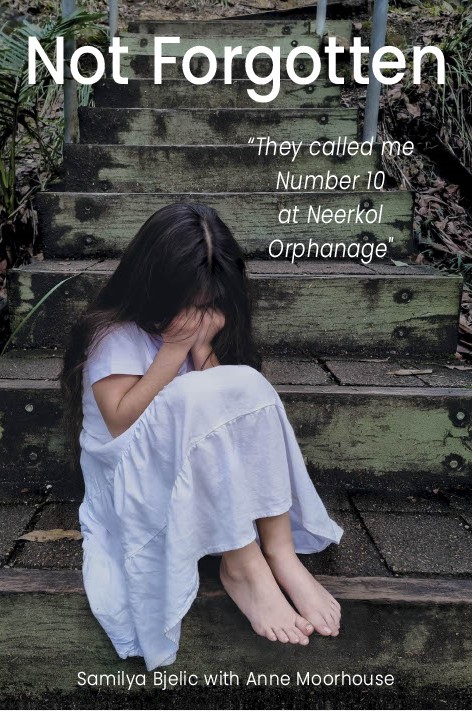
The Sisters of Mercy exported the brutal Magdalene laundry system to Australia. As Samilya described in Not Forgotten: They called me number 10 at Neerkol Orphanage she turned to the Sisters of Mercy in 1969 when she was pregnant at 16. Like other women in her situation at that time, she was shunned by her family and society. The Sisters of Mercy offered caring and support to desperate women and girls but provided abuse, humiliation and everlasting shame.
Women’s lives have changed
As I stand looking at the statue, behind me a group of nurses and teachers are protesting and advocating for better pay. They are predominantly women and I love hearing their passionate voices.
Women’s lives in Ireland have changed. As a young woman I remember being horrified that contraception was illegal in Ireland. There were a series of reforms between 1973 and 1993 until contraception was finally freely available. Those women protesting behind me have choices that were unavailable to the pregnant women who had no choice but to hide in the laundries. I hope they keep advocating for justice.
Final Journey for the Sisters of Mercy
The statistics tell the story of an another final journey: today, the remaining Sisters of Mercy in Ireland and Australia have dwindled to just 1,000 in each country, their average age now 83. The walls of secrecy have crumbled, and the recruits have dried up. As the elderly sisters fade into the oblivion it is the women in the street who hold the power now. The silence and systemic abuse has been broken. The final journey has been made.
I spent hours here, scouring newspaper articles, legal documents and historical texts to ensure I provided an accurate context for Samilya’s harrowing story.
It was here I first dared to call myself a writer.
I’ve attended many fascinating and inspiring Brisbane Writer’s Festivals events hosted by the library.
Most recently I listened to a lecture on Brisbane architecture, which focused on the development and renovation of the State Library.
I love and revere this place for its history, its vault of knowledge, and the inspiration I have experienced within its quiet archives and stimulating lecture rooms.
Procrastination over
I planned to deliver our beautiful book to the State Library five years ago. Through our book, Samilya’s story would become part of Queensland history and be available for future generations. I hope that we can protect the future by learning from the past.
Why did I procrastinate? I’m unsure. Perhaps I knew that it would feel more like an ending than a beginning. All books published in Queensland must be deposited with the State Library of Queensland, and I desperately wanted our book to be entombed there.
An enormous exotic bird has taken up residence in my garden. He arrived last week, nestled in and made himself at home. His plumage is a dazzling array of gold, purple, blue, green, and red, glistening like thousands of shiny metallic coffee pods. This mythical and mysterious bird is a unique creation of kerbside junk and coffee pod art.
Not your usual coffee buzz
His hypnotic turquoise eyes and quirky head tilt draw me to him. He tells me his name is Kerbichino. At first, I worry he’ll be a coffee-frenzied guest, buzzing around, tearing up my garden, and causing havoc. He assures me that’s not his coffee vibe at all. As I get to know Kerbichino, I understand that, despite being fuelled by caffeine, he is more an iced coffee than a double-shot short black.
While he does indeed devour used aluminium coffee pods, his favourite pods are those gently discarded by:
Good friends catching up and sharing heartfelt conversations
Lovers on a lazy Sunday morning
A tired mum savouring five minutes’ peace
A retiree starting the morning with gratitude and reflection.
Family and friends, after a good meal, a few drinks and lots of laughter.
These pods are sweet delicacies.
Kerbichino finds the pods discarded by mean gossips, overzealous salespeople, or those using coffee as a hangover cure to be tough and unpalatable.
The strange side effects of caffeine
Despite Kerbichino’s strange coffee pod diet, his body is strong, forged from treasures found during Brisbane kerbside collection, and his heart is robust…… But you may smell or hear him before you see him. Kerbichino’s diet creates high-pressure, noisy, coffee-laden farts which can leave you feeling jittery and yearning for your favourite brew.
We enjoy having Kerbichino as our guest. He flies off early in the morning to peer into local kitchen windows, searching for a fresh feed of shiny coffee pods. He returns sated in the late afternoon. If you see him, please greet him warmly and leave some used pods out for him.
Kerbichino thanks all of you who have already fed him his delicious pods.
Don’t stand too close behind Kerbichino.
Born of Upcycled Junk and Coffee Pods
It took a bit of help from family.
Months of living with mess in the lounge room.
And some tricky balancing.
Coffee Pod Art Links
If you want to know more about how I make coffee pod art, you can find it below.
I’ve become an urban scavenger. I prowl the neighbourhood looking for rubbish to add to my collection of used coffee pods. Will I be able to creatively reuse this rubbish and turn it into coffee pod art?
I still want your discarded coffee pods.
My first collection of waste items was used coffee pods. Through the Facebook community page, I asked my neighbourhood to increase their coffee consumption and hand over their used pods. Thanks to the local caffeine addicts, I have a dazzling collection of brightly coloured aluminium coffee pods, but I still need more. My garage — and most of my clothes — carry the unmistakable aroma of damp, decaying coffee grounds.
I wanted to continue making upcycled garden sculptures from coffee pods, but the lack of a frame and my very limited sculpture skills left me stymied.
I played with the idea of making a peacock… surely that would be simple enough. Not too complicated, not too big… but I still didn’t know where to start. I’d need wire for a body, a neck, and a tail, but I suspected my vague ideas wouldn’t yield any results if I returned to the community Facebook page… I couldn’t even describe what I was looking for.
Where could I get some wire from…. Ah, the Brisbane Kerbside Collection.
Now I want your junk.
I devoted a couple of weekends to driving around Brisbane suburbs scheduled for their kerbside collections. I collected wire hanging baskets, plant trellises, rolls of chicken wire, and the circular covers from fans… maybe I could make this peacock. A selection of wire trip hazards joined my garage collection of festering coffee pods.
Then photos of three fabulous mythical temple birds, taken while we holidayed in Thailand, popped up on my photo memories. These were not perfect replicas of birds; they were suggestions of birds. – grand, colourful, adorned with jewels. A mythical bird seemed much more fun than a peacock. I’m no longer chained to reality, but I still had no idea how to start.
A neighbour alerted me to a garden arch discarded on a street just around the corner and urged me to take a look. The shape was perfect and became my base.
Now I had inspiration, but no real idea of what I was doing. I’ve made bits of the bird, but not sure I will use them all. I’ve made mistakes … and I’ll need even more pods.
Repurposing your rubbish
So far, my mythical bird includes:
A huge lampshade covered with string, which I stripped off and cut in half
The wire inside the packaging when we purchased a quilt
Galvanised wire, tossed in a skip during a house move
Hanging baskets
Fan covers
A garden arch
A decorative bowl
A small table
Thousands of coffee pods
And my favourite… the wire from the champagne bottle when we celebrated our 40th Wedding Anniversary.
Garbage in is not garbage out.
The process of making coffee pod art is meditative, like so many arts and crafts. As I poddle (yes, I’ve invented a word for what I’m doing), I’m reminded that;
Trash can be beautiful.
Balance and proportion are essential.
Just start. You don’t always have to have a clear direction of where you’re going, but you can still take small steps into the unknown.
Mistakes are allowed. The pieces I made first will probably not make the final cut.
I’ll know whether my collection of junk can become art in a few months…or perhaps next year. It’s a long, slow process fuelled by coffee, my love of making good from bad, family help and the contribution of my coffee-loving neighbourhood.
Keep drinking your coffee made from pods…especially your gold ones, I’m running short of those. I’m off to empty another 100 or so pods.
Today is our fortieth wedding anniversary. Our story begins on a Friday night at a packed bar, with a tall man, a business card and a borrowed pen. As I reflect on the events that shaped our relationship, I’m bursting with gratitude for the adventurous, love-filled life we’ve shared.
We met
Friday night, January 1984, at the Umbrella Bar, Sydney. My friend Angie and I were out on the town. Angie liked tall men; he was standing next to a tall man. The four of us spent the night flirting. He gave me his business card and said, “Call me”. I said, “No, you call me”. He borrowed a pen and took my number. I waited, hoping the phone would ring. It did.
Me
A Kiwi girl living in Sydney, already married and divorced twice at 28. Well-travelled, yet with limited insight into the chaotic relationship choices I was making.
Inadvertently, I’d started dragging myself out of the negative relationship cycle by embarking on a learning journey. I completed a six-month course on Communicating and Relating, an intense foray into understanding myself. I was studying Personnel Management two nights a week at TAFE. That education quietly reshaped me — strengthening my confidence and sense of self.
He
A Nowra boy living in Sydney, 25 years old, newly separated and about to graduate with a Bachelor of Business, having studied part-time for six years while working full-time as a Merchant Banker. He planned to travel and be free.
He left – and I waited.
Nine months after we met, he took off to see the world, making memories in Europe and Turkey without me.
I needed to become stable and independent, so I kept working, studying, and waiting.
Our relationship grew through flimsy blue paper aerograms – brief pages of longing and hope. Sporadic long-distance phone calls fuelled the torturous yearning, but we both needed the slowness that distance provided.
I joined him in the USA. We reunited at the San Francisco airport, but we had a backup plan for unforeseen events. There were no mobile phones in those days, so I promised, “I’ll wait for you on the steps of the Australian High Commission every day at 10 am if you don’t make it to the airport.”
We spent a month secluded in our hired Chevy Camaro, driving from San Francisco to New Orleans.
I returned to Sydney and waited some more. He kept travelling.
He came back
Finally, after 8 months, he came back and moved in with me in Sydney. He finalised his divorce. I completed my Certificate in Personnel Management.
We left
We planned a life together. Nowra seemed better than Sydney for raising kids, so we moved there and bought our first home. He worked for his parents, fixing water pumps and milking machines. He completed his electrical apprenticeship.
I took advantage of a magic moment in time where, even as a New Zealander, I could attend university for free and receive Austudy. Thank you, Gough Whitlam, for free education; you absolutely changed my life. I completed my Bachelor of Psychology, a Lifeline Telephone Counselling course and a Childbirth Education qualification.
We got married
On 29th March 1986, just two years after we met, we married in his parents’ lounge. We melted our old wedding rings to create new ones, forging the future from the past.
We left again
In the small town of Nowra, we had two beautiful children, great family support and made good friends, yet I yearned for something different.
“Let’s live overseas,” I suggested. “Ok”, he replied.
His new job was as an Accountant for an electrical company in Lae, Papua New Guinea. Looking back, I can’t quite fathom why I thought moving from Nowra to Lae — an even smaller, more isolated town — would offer me more. I bought the book, “Where There Are No Doctors”, and packed it along with my 18-month-old and 3-year-old children. Spouses were generally unable to work in PNG, yet I worked for 8 years while living there. Thank you again, Gough, for that free university degree.
He’d packed his saxophone and trumpet when we moved to PNG. I was bemused, as I’d never heard him play, except on the record that he’d made with a dance band when he was 15 years old. One night, at a party, he stood at the top of the stairs, saxophone to his lips, and the sexy sounds of the saxophone flew into my heart. I fell in love with him all over again. I was his greatest fan and the luckiest woman in the room.
He completed a Master of Business. I completed a Graduate Certificate in Training and Development.
We spent 8 years in Papua New Guinea as a family, four years in Lae and four in Port Moresby. My irrational desire to move led us to outstanding jobs, travel, learning opportunities and lifelong friends.
Our family. What a difference 24 years makes
I Left Without Him
He was offered a great job, just as we’d decided to leave PNG. He asked, “How long could I live without him?” I left with the children to start our new life in Cairns. The kids and I embraced him at the airport every Friday night, and he flew out again on Monday mornings. A communication box kept us connected. The kids and I filled it with anything we needed to talk about when he came home – drawings, bills, invitations and school reports.
I started a small business, became dissatisfied, completed my Honours in Psychology and became a psychologist.
After a frightening event in PNG, he came back to us permanently 2 years later.
He joined another band and bought a motorbike. The best gig ever was his band playing at a Harley-Davidson event. I was still his greatest fan.
We left again
When the children finished high school, it was time to leave again. The big city was calling.
We kept old friends and made new ones. We had interesting jobs, took 6 months off to travel and enjoyed our lives.
Now we are both retired. We focus on loving our family, which has grown to include a daughter-in-law and two grandsons, connecting with friends, keeping healthy, and being stimulated. He’s still cycling and playing music, and I’m still writing and madly creating coffee pod sculptures – Have you met Tall Black?
What worked for us?
After 40 years, here is what I know worked for us to build a strong, lasting marriage.
We shared a focus on family, driving positive change, continually learning, ensuring joy was part of our lives, and valuing connection with friends. Work was important because it was interesting and the means to do what mattered to us.
We each had space to enjoy solo activities, but we also loved sharing time. He is still the person I choose to spend most of my time with. I love his company.
Our love is anchored by rituals: a kiss every morning, warm greetings when we arrive home, checking in with each other at the end of the day, dinner together, and a shared late-night cuppa. Friday nights are still fun nights. When we had young children and little money, it was fish and chips by the beach; now it’s dinners out, or maybe just a drink in front of the TV. Our annual Christmas Carols, where he plays the piano and leads the singing, and friends and family gather at our home, is a highlight of the year.
We fit together well. I dream big – “let’s take six months off work and travel the world”. He makes the dreams happen, booking the travel and managing the money.
We’re on the same team, cheering each other on, celebrating each other’s successes, and supporting each other in the harder times. We build each other up. We are undoubtedly the most important people in each other’s lives.
Thank you for bringing the music to my life, Steven. We share the best of lives. I’ve loved every one of the 14,610 days we’ve been married.
My gorgeous grandson, Leo, was surrounded by his adoring great-grandfather, grandfather and father. The love for him radiated from these three men. Watching them, I wondered how the experience of becoming a dad had shifted across the three generations.
Arthur (Great Pa, Pa, Dad) – Became a father in 1957 at the age of 25.
When Arthur and I chatted about him becoming a dad, my 92-year-old father-in-law had been married to his wife, Rhonda, for 70 years. He has three children, Greg, Steven and Jenell and has a clear recollection of when his oldest son, Greg, was born.
“Rhonda was in the kitchen when her waters broke, five weeks before the due date. In those days, in a country town, women went to the doctor when they went into labour, not the hospital. The doctor thought not much would happen as the baby wasn’t due but sent Rhonda to the small hospital for a check-up. Rhonda was admitted to the hospital, and I went home to bed. I got up at daybreak and went to work fixing milking machines.
I got back to town at about 10 am. People stopped me in the street and congratulated me on becoming a father to a son, but I hadn’t heard that the baby had been born. I rushed to the hospital. Rhonda was in the ward, and newborn baby Greg was in the nursery. As was common at the time, Rhonda hadn’t been allowed to see Greg since the birth. I went straight to the nursery to make sure he had 10 fingers and toes. He was perfect. I felt like I was the last one in town to know he’d been born.
Rhonda was out of hospital in a few days, but 5 lb premature baby, Greg, stayed in the hospital for about 3 weeks. Rhonda stayed with her mother, who lived close to the hospital, which made it easier for her to walk up and deliver expressed breast milk and see Greg.
I didn’t have time off work when any of our three children were born. Rhonda’s mother helped her. Each baby was taken weekly to the baby health clinics operated by the Country Women’s Association.
I did change nappies, and you flushed them in the toilet for the initial clean. You had to hold on tight to the corner, so you didn’t lose them and block the drains.”
The couple were 22 and 25 years old when they became parents. They lived in their own home, which Arthur was building around them. Rhonda described Arthur as “working from daylight to dark”.
Steven – (Poppy, Dad). Became a father in 1987 at the age of 28.
Next came my husband, Steven, Arthur’s second son. He described his experience of becoming a dad when our son Mark was born. My mouth was firmly shut and did not prompt him, because I was there too, but this was about his experience.
Steven with baby Mark. Day 1 of becoming a dad
“I first found out I was going to become a dad through a home pregnancy test.We did two of the tests just to be sure. This was something we had planned and were both very excited and a little surprised that it hadn’t taken us long to get pregnant.
We went to childbirth classes for a few weeks, and the most important thing I learnt was the importance of being there as a support to Anne, and that I wasn’t the one having the baby.
Anne went into labour in the evening. Through the early stages of labour, she was getting in and out of the shower; she seemed very capable and confident. I was timing the contractions throughout, as we didn’t want to go to the hospital too soon. On the flip side, we didn’t want to leave it too late either. I don’t remember being worried, but I was certainly a bit scared; I’d never done this before.
I drove us to Nowra hospital, where I had also been born. The labour bag was packed, and we were prepared. We were ushered straight to the blue birthing room. The nurses examined Anne and found she was only 5 cm dilated; this was a little disappointing as we had expected her to be further progressed. It seemed like there was still a long way to go.
I continued to help Anne in and out of the shower at the hospital, rubbing her back and holding her hand. The labour went on for hours, with Anne eventually having an epidural. I didn’t want to see her hurting, but I also knew she wanted the birth to be as natural as possible.
When the baby was crowning, the doctor asked if I wanted to look. Of course I did, but what I saw made me go weak in the knees, almost fainting. I quickly retreated and sat back down at Anne’s head.
We were thrilled to hear the Doctor say, “It’s a boy”; we had chosen not to know beforehand. Our healthy son Mark was wrapped in a blue blanket and handed to Anne. I cried happy tears of joy and relief.
There were no mobile phones in those days, so I drove over to tell Mum and Dad the exciting news, had a shower and went back to the hospital. Anne and Mark were home in a couple of days. I think I had a week off work.
Having a new baby was scary; I was particularly scared of jabbing him with a nappy pin, dropping him in the bath or knocking the umbilical cord wound. I did everything I could to help.
I remember we had a big yellow nappy bucket in the bathroom. As Dad said, you flushed the dirty cloth nappies in the toilet first, holding on tight not to lose them, then soaked them in the nappy bucket until you washed them.
Mark slept in a bassinet in our room. I was aware that the baby was not allowed to sleep in our bed, and I was scared of squashing him when Anne breastfed him in bed.
Mark met two great-grandmothers and his great-grandfather in the first week of his life.
It was an amazing, wonderful thing to witness this creation of life, so special.”
Steven was 28, and I was 31 when we became parents. We had recently moved to Nowra, where Rhonda and Arthur lived.
Mark (Dad) – Became a father in 2023 at the age of 35.
And the newest dad is Mark – Steven and my son, and Arthur’s grandson. I chatted to Mark about the birth of his son Leo, who is now 3 years old.
Mark with baby Leo. Day 1 of becoming a dad.
“We did IVF to have Leo, so it was a series of interventions and then tests. I was excited and nervous when I found out my wife, Kim, was pregnant. We’d already had a miscarriage.
We went to two birthing courses, one that the midwives ran and the other a hypnobirthing one.
The hypnobirthing course was more about the mother’s rights, how to ask questions and make decisions, rather than go with the whim of the doctors and midwives. I also learnt techniques about how to calm Kim and how to make us feel more connected as a couple.
The midwife course was more about medical interventions like epidurals and continuous fetal monitoring.
Kim went into labour when her waters broke in the morning. She had some contractions, and we went to the hospital in the evening. She got checked, but the contractions were not deemed that serious, and we were sent home.
The contractions went on for another two days, and we checked in at the hospital each day. On the third morning, we went to the hospital, and the decision was made to induce Kim. I’d forgotten the bags we’d packed, so I rushed home again, dropped the dog off with mum and dad and went back to the hospital. I felt silly and was worried the baby would be born before I got back.
We were lucky to be in a birthing room; we had music, diffusers, a mood board, fairy lights and a large exercise ball.
Kim’s contractions ramped up, becoming more intense and consistent. Kim used a TENS machine and gas for pain relief. She kept mobile until contractions became 1-2 minutes apart, then she spent more time on the bed.
I was standing with her, talking her through the contractions, holding her hand, encouraging her, reminding her that the pain was good and healthy.
When she was 8 cm dilated, we knew she didn’t have long to go. About half an hour later, she was ready to push. I was holding her hand and watching. For the first time, she said she couldn’t do it anymore, but you could already see his head. We knew it was going to be a boy.
Cat Stevens “Wild World” was playing when our son was born, and I cut the cord.
The doctor only came right at the end. The labour was managed by midwives.
Leo was born at 8.30 pm. It was a gobsmacking moment, loving. I cried. Kim was amazing.
I stayed until midnight, stopped at Mum and Dad’s to tell them our wonderful news. I was back at the hospital by 6 am. We left that day after all the tests and visits by physios and lactation consultants had been done.
I had six weeks off work when Leo was born, then took another three months off when Kim went back to work when Leo was one.
During those six weeks, I started learning how to be a dad. I changed nappies, bathed Leo and cooked meals. No nappy bucket for us, we used disposables. I made sure Kim was hydrated and fed.
Leo met his grandparents on the first day.”
Mark and Kim were both 35 when they became parents. Living in Brisbane, just 5 minutes’ drive from us. They are eagerly expecting their second son in March 2026.
And now a fourth generation
Three generations of men becoming dads, three very different worlds, and one shared moment: holding their newborn child for the first time.
Now there are four generations who share the middle name Osborne.
I can’t help but wonder what it will be like for Leo if he becomes a father one day.
Whatever the future looks like, I hope he feels what these three men felt — awe, love, and the quiet realisation that life has just changed forever. I hope he and his soon-to-be-born brother continue to feel the legacy of love that these men have bestowed on him.
If you’d told me that one day I’d have a giraffe living in my suburban Brisbane backyard, I would’ve laughed and wondered what on earth you were thinking. And yet… here we are.
Tall Black — my majestic, caffeine‑fuelled, eco‑friendly giraffe — now stands proudly in the garden, shimmering in the sun in his coat of repurposed coffee pods. He’s tall, he’s colourful, and he’s a daily reminder that creativity (and a little community spirit) can turn discarded bits and pieces into something unexpectedly joyful.
How It All Started: The Broken Christmas Giraffe
I’ve always loved the idea of a giraffe peeking over my garden fence. Something about the absurdity of a rogue giraffe in suburban Brisbane appealed to me. But it stayed a fantasy… until 2024, when Bunnings released a Christmas lights giraffe.
My daughter surprised me with a giraffe delivered in a compact box. My husband and I eagerly assembled it and threaded the Christmas lights through the frame. We positioned it to peer over the fence exactly as I’d imagined.
Then we read the instructions.
“Indoor use only.”
Where, exactly, does one put a 2.1‑metre giraffe inside a house? The lights died not long after Christmas, and while the frame still stood tall and proud, my beloved giraffe had lost its sparkle and flamboyancy.
The Coffee Pod Epiphany
I knew my giraffe needed a new coat — something fun, something colourful, something that would bring him back to life. Coffee pods suddenly seemed perfect.
There was just one problem: at two coffees a day, I’d be in my 90’s before I collected enough pods. And they’d all be gold and purple, which is what we drink at home.
So, I did what any resourceful person would do: I begged my community for their used coffee pods.
People looked at me strangely at first — “You want my rubbish… for a giraffe?” — but then they rallied. And oh, did they rally.
Pods arrived from all over Australia:
Friends and family stored their used pods and collected more from their friends and families
My Nia dance teacher (who collected a stash from an Airbnb)
My parents‑in‑law
My husband’s workplace
My niece’s hairdressing salon
Even my dentist, who contributed beautiful lilac pods every week
Suddenly, I had a rainbow of colours and a steady supply. Tall Black’s new wardrobe was underway.
The Poddling Process (Yes, It Became a Verb)
Transforming thousands of coffee pods into a giraffe coat is not for the faint‑hearted. Here’s the process I perfected (or maybe endured):
Empty the pod — first, I used nail scissors to cut the foil open; then I discovered a purpose‑built tool (thank you, Amazon) that made the process easier.
Compost the coffee and discard the foil
Wash the pods
Flatten them — 4–5 hammer hits each
Punch four holes in every pod
Attach stainless steel wire to the frame using swages and clamps (the fiddliest part by far)
Weave the pods into a giraffe coat
By the end, I estimate Tall Black was wearing around 2,500 pods. A true caffeine couture moment.
Tall Black Today
Now Tall Black stands in the garden, shimmering with colour, personality, and a touch of mischief. He’s become a conversation starter, a sustainability ambassador, and a daily reminder that beauty can come from the things we usually throw away.
He makes me smile every time I look out the window.
Help Me Find My Next Project
Tall Black has been such a joy that I’m itching for another challenge. Maybe a dragon. Maybe a peacock. Maybe something I haven’t even imagined yet.
The only thing I’m missing is a frame.
So, if you ever spot a large, slightly ridiculous metal animal frame looking for a new home — you know who to call.
Three gorgeous children, under the age of 8, in a Brisbane suburban backyard on a sunny Monday morning. They embark on a serious lizard-hunting expedition. My heart swells with joy…. and aches with sorrow as I watch them.
A Great Nephew
The oldest boy is my great-nephew. He is my sister’s grandson, visiting from New Zealand with his parents for a lovely long weekend of family connection and to join our annual Christmas Carols extravaganza. I visited my sister in New Zealand in January 2025. At 79 years old, she was living at home with her husband, and while she seemed somewhat withdrawn and a little confused, life was much like it had been for many years. I had an underlying sense of disquiet and gently encouraged her to talk about death and dying with her children. By May, everything had changed, and we found ourselves revisiting New Zealand. This time, my sister was living in an aged care facility and did not know who I was. She was frail and unable to walk. She will never watch her grandson curiously adventuring in her backyard or hear his yelps of delight.
A Great Niece
The girl is my great niece. She lives in Brisbane and is the youngest granddaughter of my husband’s brother, who died in 2024, too young at 66. We’ve had the delight of looking after her for six Mondays in the lead-up to Christmas. Although she lives close by, we have previously spent more time with her older sisters, so we relished getting to know this smart and inquisitive girl who loves exploring our garden. I wish her Poppy could see her now, eyes bright with wonder.
A Grandson
The youngest boy is my grandson, with us regularly on Mondays. He is the link between the two older children who come from different branches of his family. They are second cousins to him but strangers to each other until now. His excitement is pure, his joy contagious as his second cousins join him on a lizard hunt. In their laughter, I hear the next generation weaving new threads of connection.
Ordinary days, extraordinary moments
An ordinary day, but not an ordinary moment. It’s a moment heavy with meaning—a snapshot of family history, love and loss. A moment that rewards every effort to show up for these children, and honours the trust their parents place in us. A moment that whispers: This is what matters.
I am so grateful to be here on this day with these three children and hold this memory close.
What was your 2025 Moment?
This was mine—a simple backyard adventure that became a treasured memory. Life gives us these quiet, extraordinary moments if we pause long enough to notice them.
I’d love to hear your magic moment for 2025. What was the moment that made you stop, breathe, and think, This is what matters? Share your moments in the comments below. Let’s celebrate the beauty of everyday life together.
In Thailand and Cambodia people make offerings to spirits every day to create positive karma. We, as tourists, must have been included in their wishes for happiness and well-being as we’ve had a fortuitous trip.
We anticipated a spectacular but busy day at the Grand Palace as we joined the throng of tourists channeled through the entrance gates. We followed the crowds along the designated path to the resplendent buildings. Pausing to gain our bearings we found ourselves in front of a small sign offering a “Free English Tour at 10.30 am”, it was 10.27 am. Our unplanned morning allowed us to be here at exactly the right time and place. There were thousands of people visiting the Grand Palace that day but we joined a group of just three others. We enjoyed a funny, informative tour, with a guide who spoke excellent English and happily answered our questions.
The Flower Festival, Chiang Mai
We had no idea Chiang Mai held a spectacular annual flower festival for three days in February. On our second morning in Chiang Mai we caught a glimpse of one colourful exhibit as we drove past on our tour. After discovering it was the last day of the festival, and although we were hot and bothered that evening, we dragged ourselves along to Suan Buak Haad Public Park. There we were treated with an exotic array of 25 large parade floats ornately adorned with flowers, petals and plants. It was an elaborate celebration of botany, art and culture.
Meet the Family, Koh Samui
We gladly accepted the invitation to go to Koh Samui with our daughter-in-law, son and grandson where we would be joined by three of her sisters from England. With their partners and children we would become a party of 15. We built our trip to Thailand and Cambodia around the week we would meet the family.
The offerings we accepted that week included a trip to the elephant refuge, a wonderful day on a boat, shared meals, swims in the pool with the kids, sunset cocktails and numerous cups of tea. What a joy to share time with this loving and fun family. We watched our daughter-in-law bask in the love of her family and our grandson thrive with the doting care of his English cousins, aunties and uncles. In the steamy heat of Koh Samui relationships were built that will last a lifetime.
The Giant Puppet Project, Siem Reap
Wandering through the crowded streets of Siem Reap on our first night in Cambodia, an older man with a British accent yelled at us “Come on, you’ll miss the puppet show.” He ran on, excitedly beckoning to us. “Come on, come on, it’s about to start.” We followed him, unsure whether this was an offering or a scam. Then, around the corner we saw the giant light filled puppets, and were mesmerised. We had stumbled on the annual Giant Puppet Project which celebrates art, culture and community spirit. Each of the 9 puppets was lead by groups of children who had helped to create them.
Children Are Not Tourist Attractions
There was one offering I should have refused. A tour in Chiang Rai included a trip to the village of the long-necked Karen people. These colourfully dressed tribal women traditionally wear heavy metal rings around their necks. As refugees from Myanmar they have no right to work, education or health care in Thailand. We paid a fee to enter the village and the women sat outside their shops posing for photos.
Some women had their traditionally dressed school age daughters with them. Drawn by one of the young girl’s deep brown eyes and engaging sales skills, and moved by the poverty of the village, I bought a necklace from her. She posed for a photo with me, which I will not post here. That night I pondered whether buying from a child of about 7 years old was appropriate. Was I fostering child labour and reducing her chance of going to school?
Ten days later in Siam Reap, a sign on the back of a toilet door in Apopo Visitor Centre (where they train rats to find land mines) confronted me. It stated: “Children are not tourist attractions. Think before visiting an orphanage”. At Phare Circus, where we watched an astounding modern circus performance, a similar abbreviated sign on the toilet wall, simply said “Children are not tourist attractions.” Both Apopo and Phare Circus are community organisations.
The signs were by the Child Safe Movement who aim to stop “orphanage tourism” which contributes to separating children from families and often supports unscrupulous operators. A few years ago, while writing Not Forgotten: They called me number 10 at Neerkol Orphanage I visited the Little Flower Orphanage in Beijing, which is not open to tourists. I have long wondered whether volunteering or visiting orphanages is beneficial for the children living there.
Children are not tourist attractions. Would it have helped if I insisted on buying the necklace from an adult at the Karen village? Perhaps the offering was the moment of reflection and learning.
Sunrise over Angkor Wat, Siem Reap
Our Cambodian bike tour included a visit to Angkor Wat at sunrise. Despite the allure of the event, I dreaded the 4.40am pick up. For a night owl like me that’s torture. I tiredly sat in the dark waiting for the sunrise and was blessed to see it gently rise behind one of the most spectacular buildings on the planet. The following day our guide emphasised how lucky we were, as for weeks prior the sunrises had been consistently dulled due to cloud cover.
As I post this I’m waiting for the plane home, appreciative of all that we have been offered and accepted on this amazing trip.
If this story resonated with you, you might enjoy another moment from my travels.
Steven suggested including a cycling tour while we were in Thailand, but I was hesitant. I’d enjoyed previous bike tours, except for that time I cried when I couldn’t get up a hill in Croatia. At 68 could I really manage a cycling tour? I’m not a cyclist who dons Lycra and pedals furiously at every opportunity. I occasionally get on my e-bike but hadn’t been on it for over a year. After a five-minute bike ride up and down the street, I felt confident in my riding prowess, so I set a tour criteria: flat terrain, an e-bike, only 30 km a day, no city cycling and a support van. Steven found a tour with Spice Roads Cycling.
Day 1 – A little bit wobbly.
As a pedestrian I’d already braved the intense traffic in Bangkok and Chiang Mai, noticed the cavernous potholes, avoided numerous street dogs for fear they would bite me, sweltered in the tropical heat and wondered where all the cyclists were. Was I mad?
Noom our guide and Mr Sak the driver loaded us on to the tour van where we discovered this was to be a VIP tour for two. We drove out of Chiang Mai to the Buatong Waterfall-Chet Si Fountain National Park. After enjoying the park and warming our legs up with a hike down to the falls we met our bikes. I had anticipated a step through “woman’s” bike, not one with a bar across and I failed to lift my leg over. The only way I could mount my bike was to lay it on the ground to straddle it. After a wobbly test ride around the car park I was off.
I took my position at the tail of our small pack. At least I had two people to follow but I had no idea where I was going or how long I would be cycling for. I hoped the front crew would warn me of hazards ahead.
Noom led us along quiet roads, past crops of soybeans, mangos, garlic, chilli, rubber trees, marijuana, and rice. The sun blazed down as I dodged potholes, jiggled over dirt roads and stealthily passed sleeping street dogs. I gripped the handlebars so tightly my wrists and shoulders ached.
Yet it was wonderful to be slowly savouring the quiet countryside. We stopped to pat a family of water buffalo. We cycled by colourful and ornate temples and shrines dotted amongst the crops. Noom introduced us to women making soybean patties for local stores. They seemed delighted at the interruption to their day and happily demonstrated their skills.
Morning tea of fresh mango and watermelon served beside a small, newly built temple, was my favourite space of the day. Set amongst the fields, isolated and serene as it glistened in the sun.
We cycled on, lunch in a shady local restaurant overlooking the paddy fields, followed by a visit to Wat Ban Den, a huge and spectacular temple. We were lucky to observe the colourfully attired Palong people from Myanmar (Burma) erecting equally colourful banners for a ceremony.
I ended the 30 km ride hot, tired, stressed, stiff, grateful and happy.
Day 2 – Powering up the hill.
My bike today felt familiar, I didn’t grip the handle bars quite so tightly, my shoulders relaxed and the day was cooler.
We rode to the Chiang Dao Caves, bypassing many beautiful temples adorning every tiny community. We stopped to admire a new enormous Buddha and Monk. How is it that such majestic and beautiful statues are still being built?
To enter the limestone caves we passed through another glorious temple along with a pool of koi, garlands of colourful streamers, and statues of the animals from the Chinese zodiac.
On returning from the caves I discovered the sole of my shoe was coming adrift but resourceful Mr Sak pulled out a tube of glue and promptly fixed it.
Our next stop was an ultra modern, industrial style coffee shop with the first solar panels and battery pack we’d seen. The coffee shop overlooked the Chiang Dao Hot Springs where we were headed. The springs were crowded with young tourists who appeared to be camping or living there, with no desire for crowded spaces we cycled on.
I focused on dodging the dinner plate sized leaves from the teak trees, strewn over the roads. These and shadows from trees camouflaged unwelcome potholes. The street dogs continued to ignore us, hardly raising their heads as we rolled by.
I thanked my e-bike as I cycled up one short steep hill, taking the lead and waiting in the shade for the other two to arrive. I would not have been able to do this without the power assistance the bike provided.
Lunch was takeaway Pad Thai beside another temple. Temples provide toilets and rest spaces where visitors are welcomed.
I finished our 43 km ride calm, relaxed and sated.
Day 3 – Cyclists ahead!
A five minute cycle along a busy four lane road led us to a local market in Fang. As we wandered Noom named the unfamiliar produce and enticed us with a plate of marinated frogs. Noom also assured me we would soon be out of the traffic.
As we re-entered the traffic Mr Sak unexpectedly appeared behind us with the support van. With a “cyclists ahead” sign on the back of the van and a flashing light he created a break in the traffic and shepherded us across the lanes.
A pattern to our days was emerging as we stopped for Thai iced coffee and had morning tea of fresh fruit and sticky rice beside a temple.
I initially thought there were cast iron cooking pots outside every home and business on our route but they were rubbish bins made from recycled tyres.
Along a dirt road we found our path blocked by two trucks laden with foliage to feed elephants. The workers picking garlic in the field laughed and waved to us, beckoning us to come help them toil in the sun. I thankfully rode on.
The 33km ride felt easier today and we finished before lunch. I’m now more adept at mounting my bike. I can lift my leg higher and position the bike better but I’m still a long way from elegance.
Day 4 – Avoiding elephant poo.
We loaded the bikes on a longtail boat and motored for an hour up the Mae Kok River with our skilled Captain navigating us through many rapids. Apart from two operating sand dredges early in the trip and one other boat our company for the morning were herds of water buffalo.
We pulled up the riverbank and disembarked. There was no road, nor signs of civilisation. Noom told us the area had been changed by recent floods. After we all had a bush wee Noom set off on foot to find the road. He returned and we pushed our bikes through the scrub until we hit the remnants of a bush track. This led us directly into the grounds of a high school where the children waved and yelled at us as we cycled through.
We rode on, over rutted dirt roads, relieved by small patches of concrete road. The hills were tough for Noom and Steven, but not for me as I powered ahead of them. We also had new riding challenges today, dodging low hanging branches and avoiding elephant poo.
Our hot, dusty ride was rewarded by a stop at the Karen Ruammit Elephant Camp where we fed a 40 year old female some sugar cane.
We rode 29 km, today averaging 17 km an hour, it was the shortest trip but felt the hardest. The day was hot and the road was rough. I finished the trip exhausted, sweaty, joyful, grateful, relieved and proud.
 This Final Journey Statue is a memorial for the woman, girls and children abused by the Catholic Church Sisters of Mercy in Magdalene laundries in Ireland. The backbreaking unpaid labour at the laundries was undertaken by unmarried pregnant woman and girls whose “shame” was hidden behind the cloistered walls and the rule of silence imposed by the Sisters on the inmates. The women washed stains from sheets as penance for the stains on their souls, condemned for being unmarried mothers. The Sisters of Mercy separated the babies from their mothers at birth, regardless of the mothers’ desire, and the babies were adopted, often by rich overseas families.
 As I stand looking at the statue, behind me a group of nurses and teachers are protesting and advocating for better pay. They are predominantly women and I love hearing their passionate voices.


 His hypnotic turquoise eyes and quirky head tilt draw me to him. He tells me his name is Kerbichino. At first, I worry he’ll be a coffee-frenzied guest, buzzing around, tearing up my garden, and causing havoc. He assures me that’s not his coffee vibe at all. As I get to know Kerbichino, I understand that, despite being fuelled by caffeine, he is more an iced coffee than a double-shot short black.


 My first collection of waste items was used coffee pods. Through the Facebook community page, I asked my neighbourhood to increase their coffee consumption and hand over their used pods. Thanks to the local caffeine addicts, I have a dazzling collection of brightly coloured aluminium coffee pods, but I still need more. My garage — and most of my clothes — carry the unmistakable aroma of damp, decaying coffee grounds.
 I wanted to continue making upcycled garden sculptures from coffee pods, but the lack of a frame and my very limited sculpture skills left me stymied.
 I devoted a couple of weekends to driving around Brisbane suburbs scheduled for their kerbside collections. I collected wire hanging baskets, plant trellises, rolls of chicken wire, and the circular covers from fans… maybe I could make this peacock. A selection of wire trip hazards joined my garage collection of festering coffee pods.
 I’ll know whether my collection of junk can become art in a few months…or perhaps next year. It’s a long, slow process fuelled by coffee, my love of making good from bad, family help and the contribution of my coffee-loving neighbourhood.

 We got married
 I started a small business, became dissatisfied, completed my Honours in Psychology and became a psychologist.
 Our love is anchored by rituals: a kiss every morning, warm greetings when we arrive home, checking in with each other at the end of the day, dinner together, and a shared late-night cuppa.
 My gorgeous grandson, Leo, was surrounded by his adoring great-grandfather, grandfather and father. The love for him radiated from these three men. Watching them, I wondered how the experience of becoming a dad had shifted across the three generations.

 Three generations of men becoming dads, three very different worlds, and one shared moment: holding their newborn child for the first time.

 I knew my giraffe needed a new coat — something fun, something colourful, something that would bring him back to life. Coffee pods suddenly seemed perfect.
 Transforming thousands of coffee pods into a giraffe coat is not for the faint‑hearted. Here’s the process I perfected (or maybe endured):
 Tall Black has been such a joy that I’m itching for another challenge. Maybe a dragon. Maybe a peacock. Maybe something I haven’t even imagined yet.

 The oldest boy is my great-nephew. He is my sister’s grandson, visiting from New Zealand with his parents for a lovely long weekend of family connection and to join our annual Christmas Carols extravaganza. I visited my sister in New Zealand in January 2025. At 79 years old, she was living at home with her husband, and while she seemed somewhat withdrawn and a little confused, life was much like it had been for many years. I had an underlying sense of disquiet and gently encouraged her to
  An ordinary day, but not an ordinary moment. It’s a moment heavy with meaning—a snapshot of family history, love and loss. A moment that rewards every effort to show up for these children, and honours the trust their parents place in us. A moment that whispers: This is what matters.
 In Thailand and Cambodia people make offerings to spirits every day to create positive karma. We, as tourists, must have been included in their wishes for happiness and well-being as we’ve had a fortuitous trip.
 We anticipated a spectacular but busy day at the Grand Palace as we joined the throng of tourists channeled through the entrance gates. We followed the crowds along the designated path to the resplendent buildings. Pausing to gain our bearings we found ourselves in front of a small sign offering a “Free English Tour at 10.30 am”, it was 10.27 am. Our unplanned morning allowed us to be here at exactly the right time and place. There were thousands of people visiting the Grand Palace that day but we joined a group of just three others. We enjoyed a funny, informative tour, with a guide who spoke excellent English and happily answered our questions.
 We had no idea Chiang Mai held a spectacular annual flower festival for three days in February. On our second morning in Chiang Mai we caught a glimpse of one colourful exhibit as we drove past on our tour. After discovering it was the last day of the festival, and although we were hot and bothered that evening, we dragged ourselves along to Suan Buak Haad Public Park. There we were treated with an exotic array of 25 large parade floats ornately adorned with flowers, petals and plants. It was an elaborate celebration of botany, art and culture.
 We gladly accepted the invitation to go to Koh Samui with our daughter-in-law, son and grandson where we would be joined by three of her sisters from England. With their partners and children we would become a party of 15. We built our trip to Thailand and Cambodia around the week we would meet the family.
 The Giant Puppet Project, Siem Reap
 There was one offering I should have refused. A tour in Chiang Rai included a trip to the village of the long-necked Karen people. These colourfully dressed tribal women traditionally wear heavy metal rings around their necks. As refugees from Myanmar they have no right to work, education or health care in Thailand. We paid a fee to enter the village and the women sat outside their shops posing for photos.
 Ten days later in Siam Reap, a sign on the back of a toilet door in
  Our Cambodian bike tour included a visit to Angkor Wat at sunrise. Despite the allure of the event, I dreaded the 4.40am pick up. For a night owl like me that’s torture. I tiredly sat in the dark waiting for the sunrise and was blessed to see it gently rise behind one of the most spectacular buildings on the planet. The following day our guide emphasised how lucky we were, as for weeks prior the sunrises had been consistently dulled due to cloud cover.
 Noom our guide and Mr Sak the driver loaded us on to the tour van where we discovered this was to be a VIP tour for two. We drove out of Chiang Mai to the Buatong Waterfall-Chet Si Fountain National Park. After enjoying the park and warming our legs up with a hike down to the falls we met our bikes. I had anticipated a step through “woman’s” bike, not one with a bar across and I failed to lift my leg over. The only way I could mount my bike was to lay it on the ground to straddle it. After a wobbly test ride around the car park I was off.
 Yet it was wonderful to be slowly savouring the quiet countryside. We stopped to pat a family of water buffalo. We cycled by colourful and ornate temples and shrines dotted amongst the crops. Noom introduced us to women making soybean patties for local stores. They seemed delighted at the interruption to their day and happily demonstrated their skills.
 Morning tea of fresh mango and watermelon served beside a small, newly built temple, was my favourite space of the day. Set amongst the fields, isolated and serene as it glistened in the sun.
 My bike today felt familiar, I didn’t grip the handle bars quite so tightly, my shoulders relaxed and the day was cooler.
 On returning from the caves I discovered the sole of my shoe was coming adrift but resourceful Mr Sak pulled out a tube of glue and promptly fixed it.
 I thanked my e-bike as I cycled up one short steep hill, taking the lead and waiting in the shade for the other two to arrive. I would not have been able to do this without the power assistance the bike provided.
 A five minute cycle along a busy four lane road led us to a local market in Fang. As we wandered Noom named the unfamiliar produce and enticed us with a plate of marinated frogs. Noom also assured me we would soon be out of the traffic.
 A pattern to our days was emerging as we stopped for Thai iced coffee and had morning tea of fresh fruit and sticky rice beside a temple.
 The 33km ride felt easier today and we finished before lunch. I’m now more adept at mounting my bike. I can lift my leg higher and position the bike better but I’m still a long way from elegance.
 We loaded the bikes on a longtail boat and motored for an hour up the Mae Kok River with our skilled Captain navigating us through many rapids. Apart from two operating sand dredges early in the trip and one other boat our company for the morning were herds of water buffalo.
 We pulled up the riverbank and disembarked. There was no road, nor signs of civilisation. Noom told us the area had been changed by recent floods. After we all had a bush wee Noom set off on foot to find the road. He returned and we pushed our bikes through the scrub until we hit the remnants of a bush track. This led us directly into the grounds of a high school where the children waved and yelled at us as we cycled through.
 We rode on, over rutted dirt roads, relieved by small patches of concrete road. The hills were tough for Noom and Steven, but not for me as I powered ahead of them. We also had new riding challenges today, dodging low hanging branches and avoiding elephant poo.